A digital product can have a strong business case, world-class engineers, a clear roadmap, and substantial funding, yet still struggle to reach the market effectively.
When digital initiatives stall, the root cause is rarely the underlying code. The real culprit is delivery drag: changing requirements, unmanaged dependencies, unresolved decisions, and teams operating from conflicting assumptions.
Individually, these look like minor operational hiccups. Combined, they create friction that burns engineering capacity and delays market momentum.
Successful digital products require more than teams that can write software. They require a disciplined delivery function to connect priorities, timelines, cross-functional dependencies, and quality into a single execution stream. That coordination layer is where project execution turns into a competitive advantage.
What Delivery Discipline Actually Means
Delivery discipline is frequently mistaken for project administration. It is not about updating Jira trackers, populating Gantt charts, or sending passive status emails.
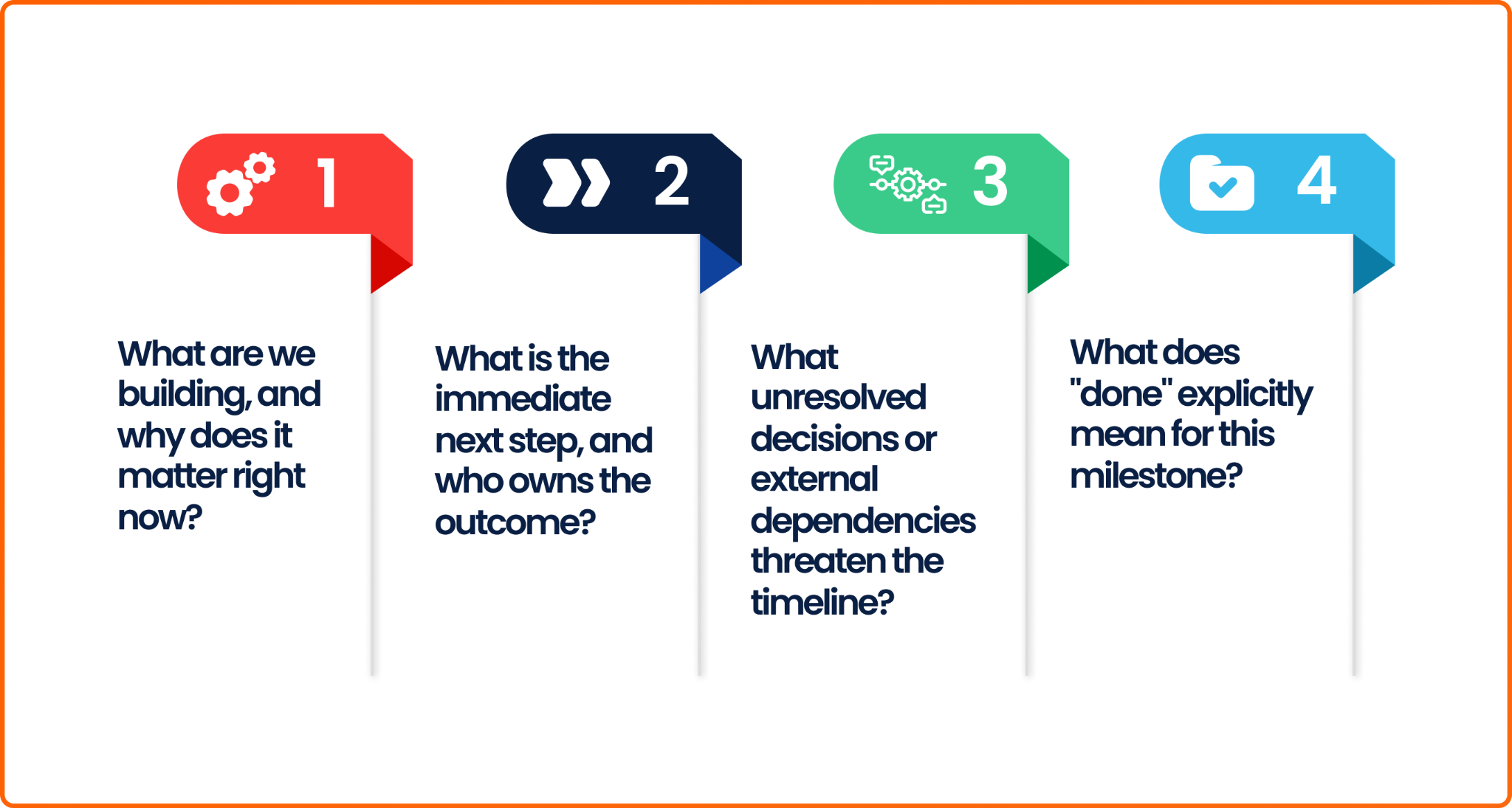
Delivery discipline is the ability to consistently translate a product objective into coordinated action, maintaining alignment even when real-world constraints change. A disciplined execution environment ensures immediate clarity around core delivery questions:
- What are we building, and why does it matter right now?
- What is the immediate next step, and who owns the outcome?
- What unresolved decisions or external dependencies threaten the timeline?
- What does "done" explicitly mean for this milestone?
When these questions are answered transparently, teams move with speed. Without this clarity, teams waste time rediscovering context, waiting on sign-offs, and refactoring preventable mistakes.
Four Friction Points Where Delivery Breaks Down
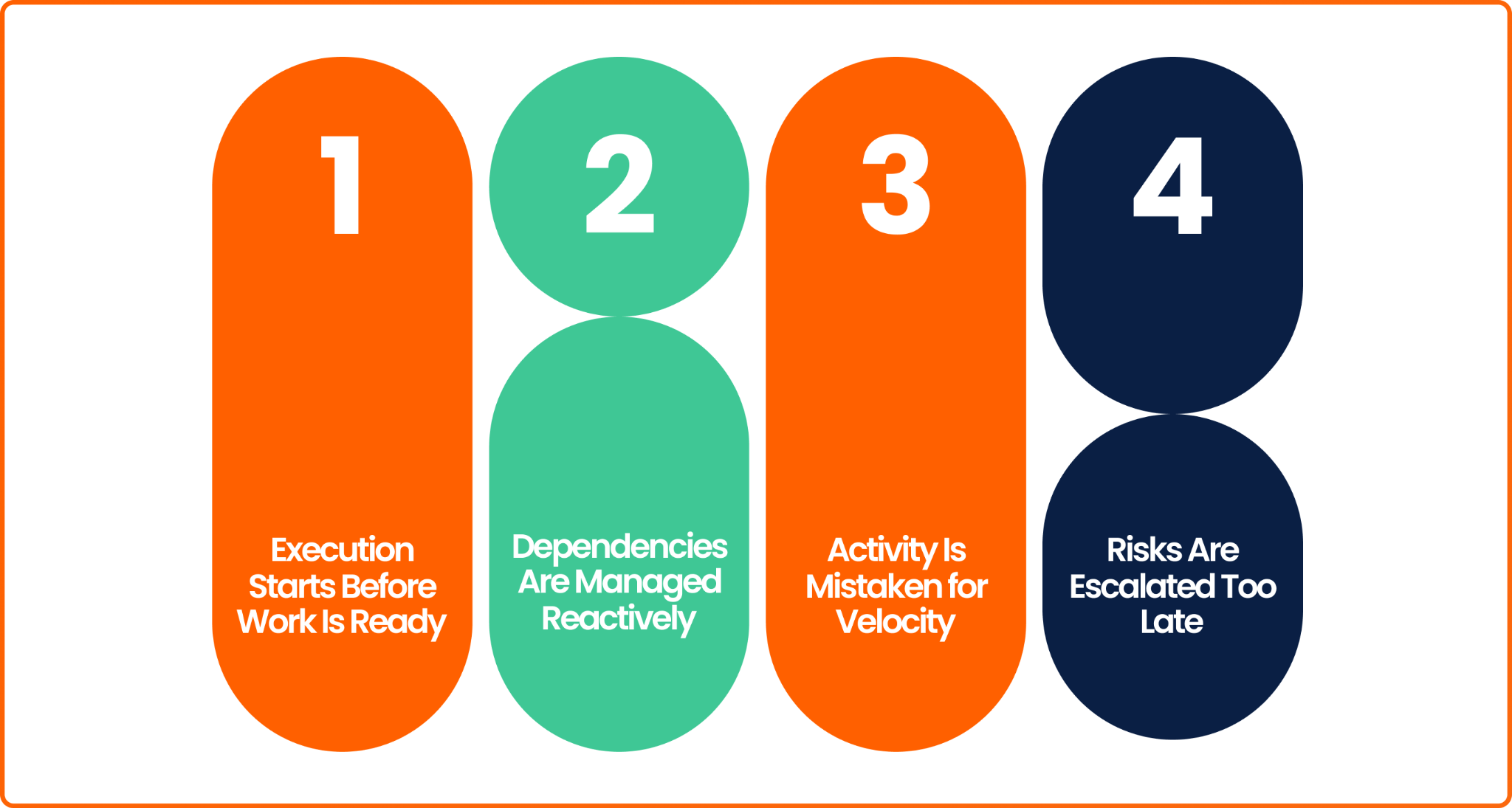
Most software delivery failures do not stem from a single catastrophic error. They accumulate through subtle operational gaps:
1. Execution Starts Before Work Is Ready
Teams often jump into development with backlogs full of tickets that lack true operational clarity. Acceptance criteria remain vague, mockups are still shifting, and technical prerequisites are unconfirmed. The team is busy, but delivery hasn't actually started; it has merely been pre-empted, leading to costly mid-sprint rework.
2. Dependencies Are Managed Reactively
Modern software depends heavily on third-party APIs, compliance sign-offs, payment gateways, and core infrastructure. When a critical integration slips by three weeks, the ripple effect impacts the entire launch window. Delivery discipline means actively identifying and monitoring dependencies from day one.
3. Activity Is Mistaken for Velocity
A team can close hundreds of story points and still fall behind schedule. Burndown charts and ticket movements mean little if the milestone fails to yield a usable, validated feature. Disciplined teams measure progress by working deliverables, not sheer volume of tasks.
4. Risks Are Escalated Too Late
Delivery blockers rarely appear overnight. Unresolved decisions, slipping timelines, and unavailable stakeholders emit early warning signals. Without active governance, these signals compound until deadline adjustments become unavoidable.
The Project Manager Is a Delivery Engine, Not Overhead
The role of the Project Manager is often misconstrued as administrative overhead; an extra layer between executive leadership and engineering. In complex software delivery, that view is fundamentally flawed.
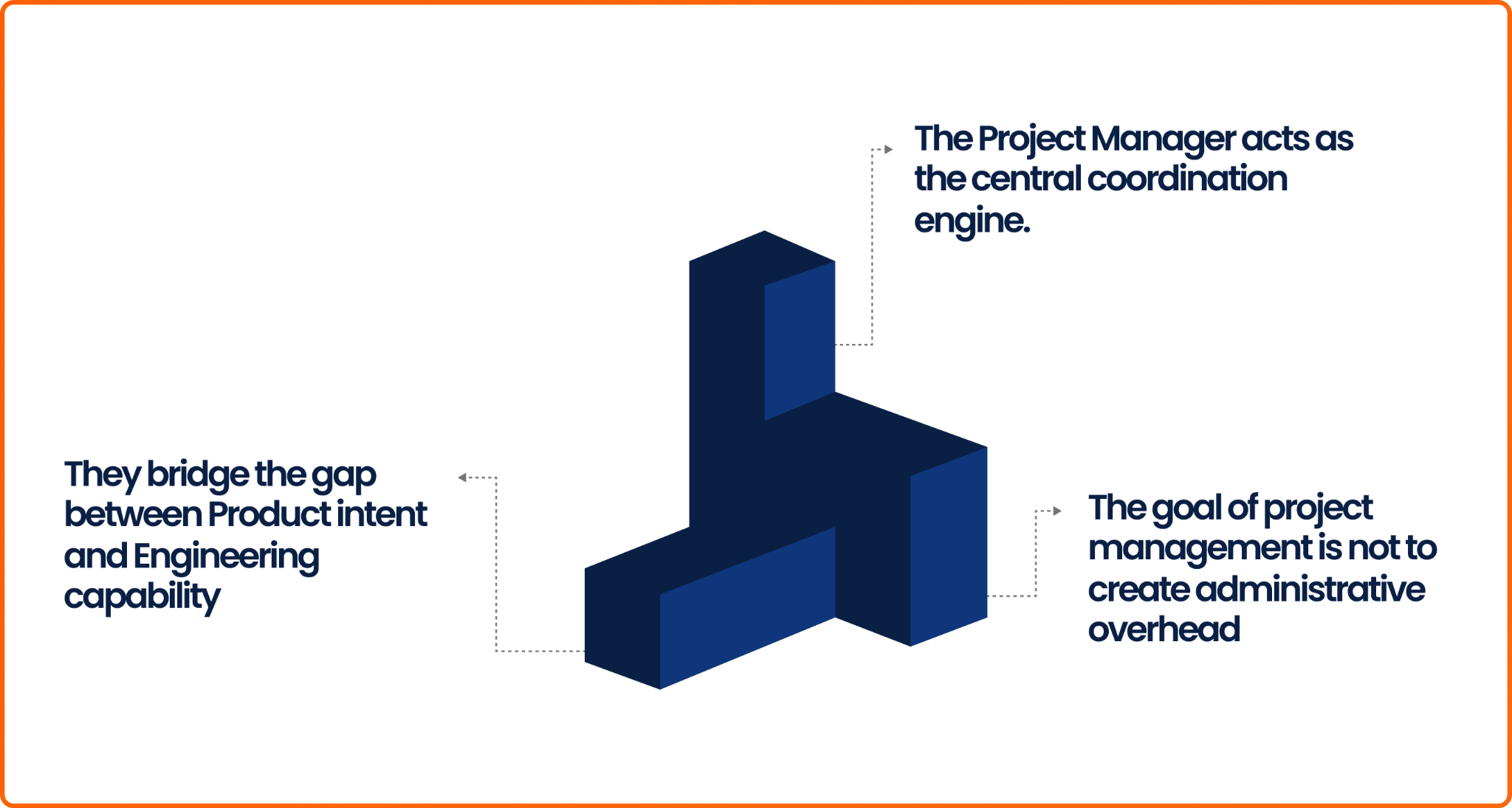
The Project Manager acts as the central coordination engine. They bridge the gap between Product intent and Engineering capability, surface risks before they trigger delays, make outstanding decisions visible, and shield developers from organisational noise.
The goal of project management is not to create administrative overhead; it is to eliminate friction so technical talent can execute cleanly.
The Assurdly Approach: Active Delivery Management
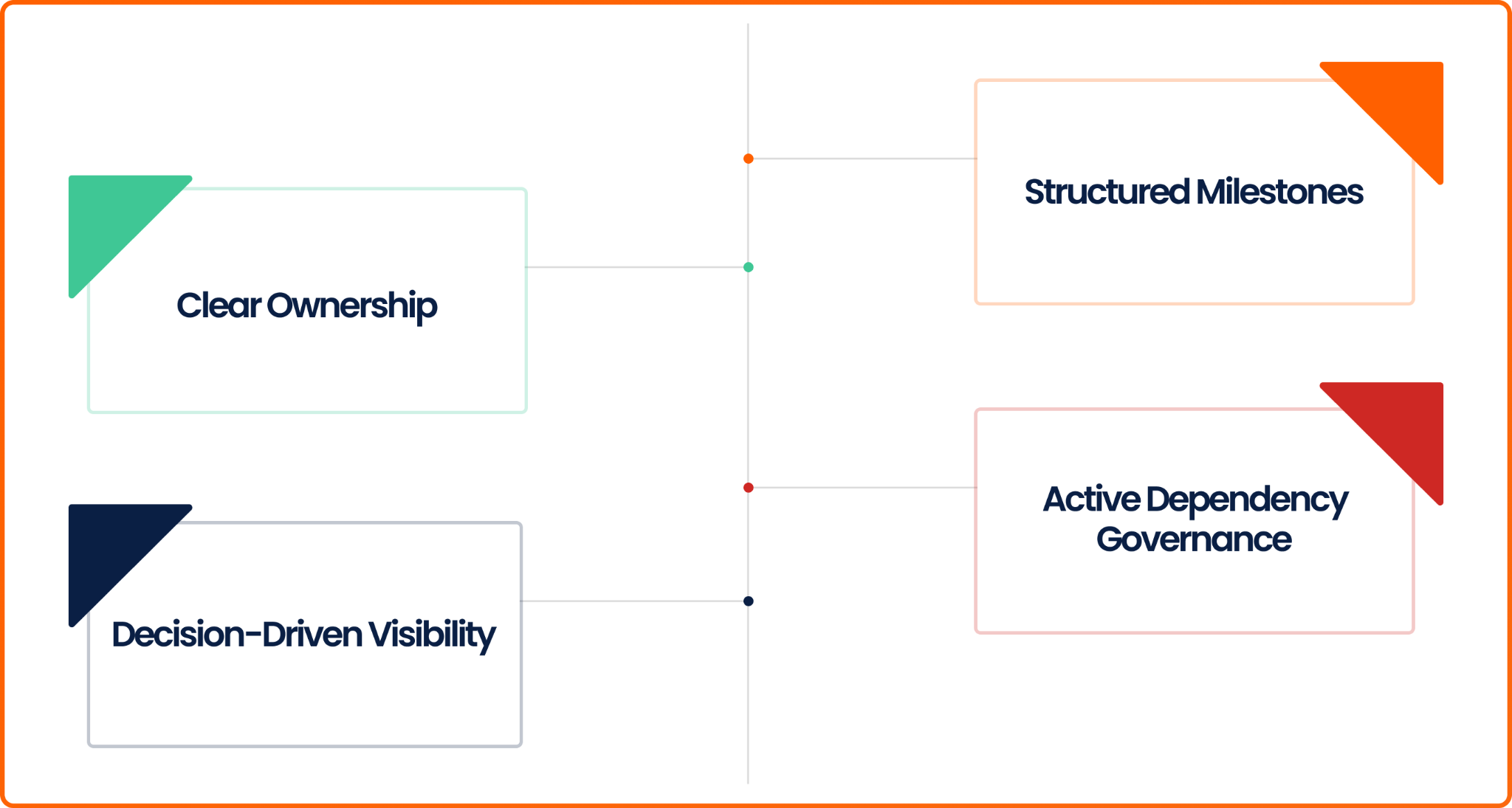
At Assurdly, we treat project management as an active, high-accountability delivery function built on four structural principles:
- Clear Ownership: Every critical deliverable is assigned to a single accountable owner, eliminating the ambiguity where tasks sit idle because "someone else" was assumed to be handling them.
- Structured Milestones: Large initiatives are broken into targeted delivery phases with explicit exit criteria, creating tight feedback loops and early visibility for leadership.
- Active Dependency Governance: Risks and third-party dependencies are continuously managed with mitigation plans, preventing unexpected bottlenecks before they impact production.
- Decision-Driven Visibility: Reporting focuses on what requires immediate action, highlighting what is on track, what is blocked, and who needs to make a decision to unlock progress.
In Practice: Orchestrating Regulated Infrastructure
Building digital financial infrastructure demands tight delivery execution. When supporting Northquest Finance in deploying a digital savings and investment platform within Nigeria's regulated ecosystem, technical execution was only part of the challenge.
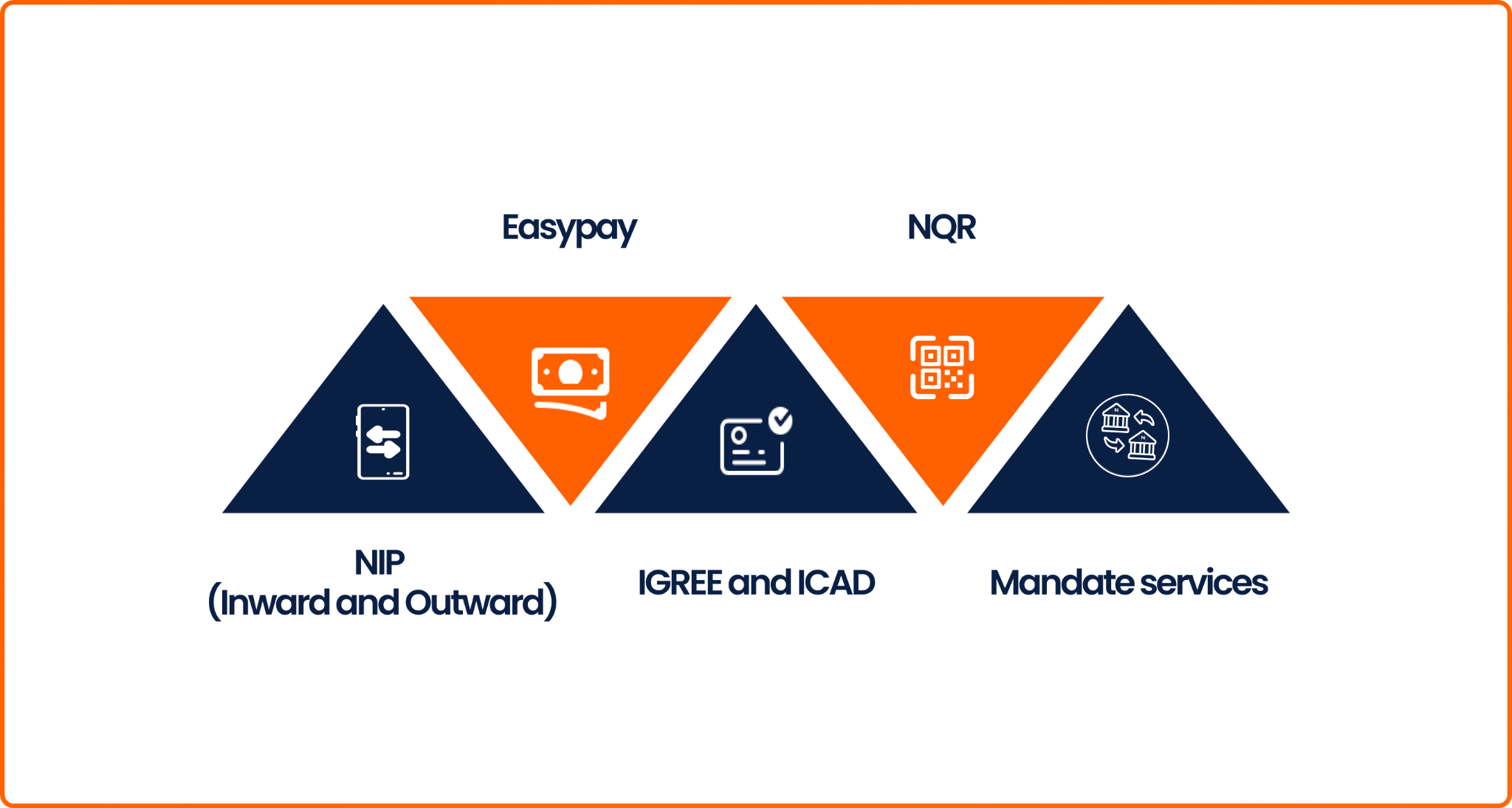
The initiative required seamless integration with NIBSS, identity verification protocols, interbank payment flows, and mandate setups for recurring savings, all while maintaining strict production stability.
Assurdly embedded structured delivery checkpoints throughout the implementation lifecycle. Instead of deferring integration testing to the final phase, dependencies were deliberately sequenced, and core modules were validated against operational criteria early.
By actively managing technical and regulatory dependencies, Northquest Finance deployed a reliable, production-ready platform built on an extensible architecture ready to support long-term growth.
The Strategic Value of Execution
As software ecosystems become increasingly interconnected, informal project coordination is no longer sufficient. Modern initiatives involve distributed engineering teams, compliance leads, external vendors, and legacy infrastructure.
The more moving parts a project has, the higher the need for structured governance. Delivery discipline protects capital, preserves engineering energy, keeps cross-functional teams aligned, and gives executive leadership confidence that product roadmaps will translate into market reality.
Moving From Roadmap to Reality
Every digital initiative reaches a pivotal phase where product strategy must transition into coordinated execution. That is where ambition meets real-world constraints. The organisations that consistently succeed are not those that avoid complexity, but those with the operational discipline to catch risks early, align dependencies, and maintain momentum.
Assurdly provides the structure, agile discipline, and delivery governance required to bring your digital products to market reliably.
If your next software launch matters, it deserves more than a project tracker and good intentions. Let us help you deliver it properly.