As organisations grow, coordination breaks down. A team of five can stay aligned through informal conversations and a shared board. A team of fifty working across multiple products, vendors, and business functions cannot rely on the same informal setup.
Projects overlap, dependencies multiply, and leadership loses visibility. In response, leadership often introduces formal structure: new approval steps, weekly status meetings, and detailed reporting decks.
Eventually, the organisation creates what looks like a Project Management Office (PMO) but feels like an administrative burden that slows execution. A functional PMO should never add friction around delivery. Its sole purpose is to make execution easier to manage, clearer to track, and faster to adjust.
What a Lightweight PMO Actually Means
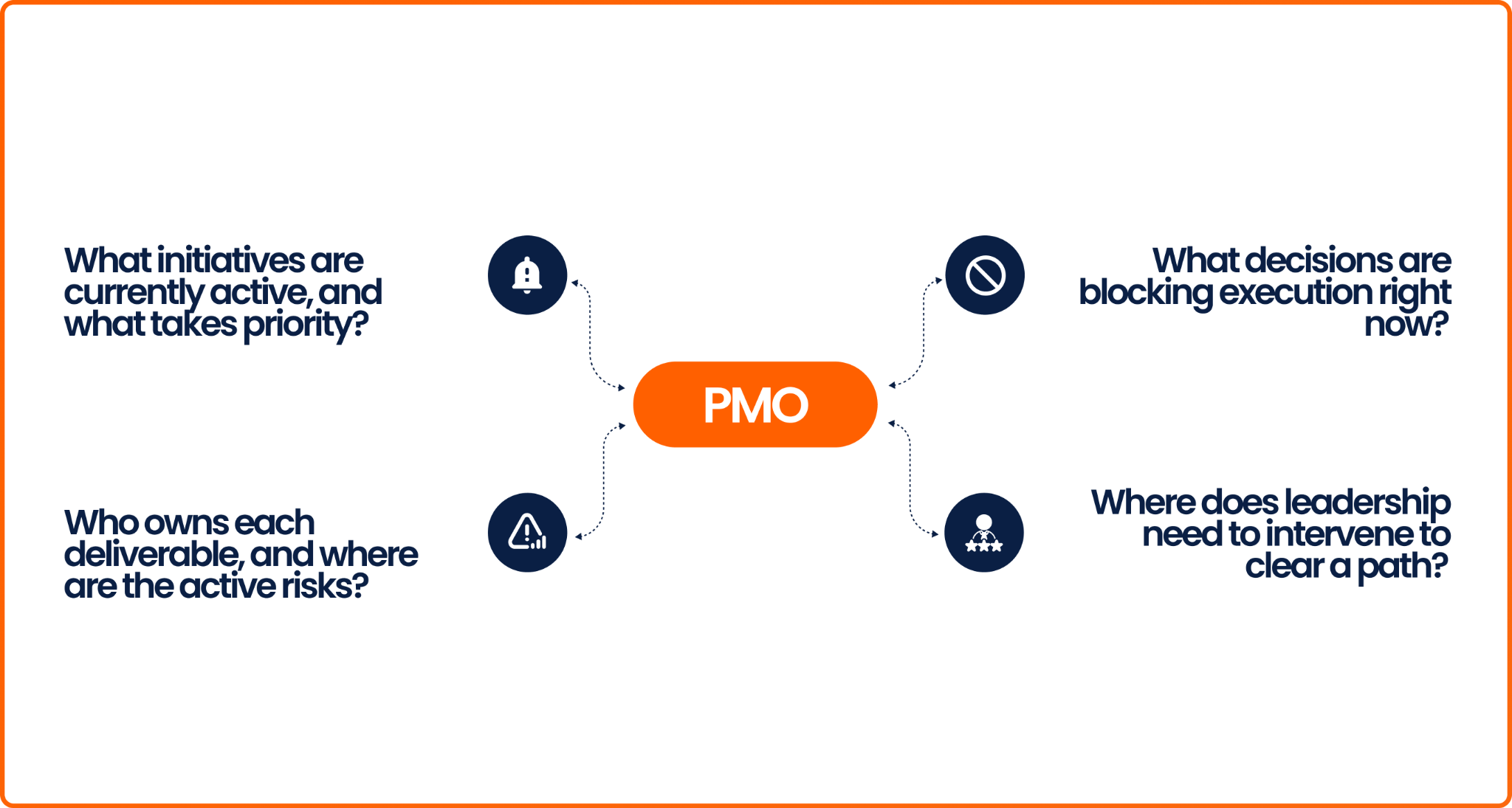
A Project Management Office exists to establish consistency across teams. However, consistency does not require standardising every single task. A lightweight PMO establishes the minimum viable structure required to answer critical operational questions:
- What initiatives are currently active, and what takes priority?
- Who owns each deliverable, and where are the active risks?
- What decisions are blocking execution right now?
- Where does leadership need to intervene to clear a path?
This approach provides visibility without micromanagement, consistency without rigidity, and accountability without bureaucratic drag.
Why Teams Resist PMOs
Engineers, product managers, and designers naturally resist traditional PMOs because they have seen them become synonymous with busywork. Product managers spend hours building status decks, engineers update three separate trackers, and leaders receive reports that are out of date by the time they are read.
This happens when an organisation mistakes process for control. Heavy processes do not improve visibility; they obscure real delivery risks behind administrative noise.
A lightweight PMO flips this dynamic: start with the operational pain points, then introduce only the structure required to solve them.
The Four Foundations of a Lightweight PMO
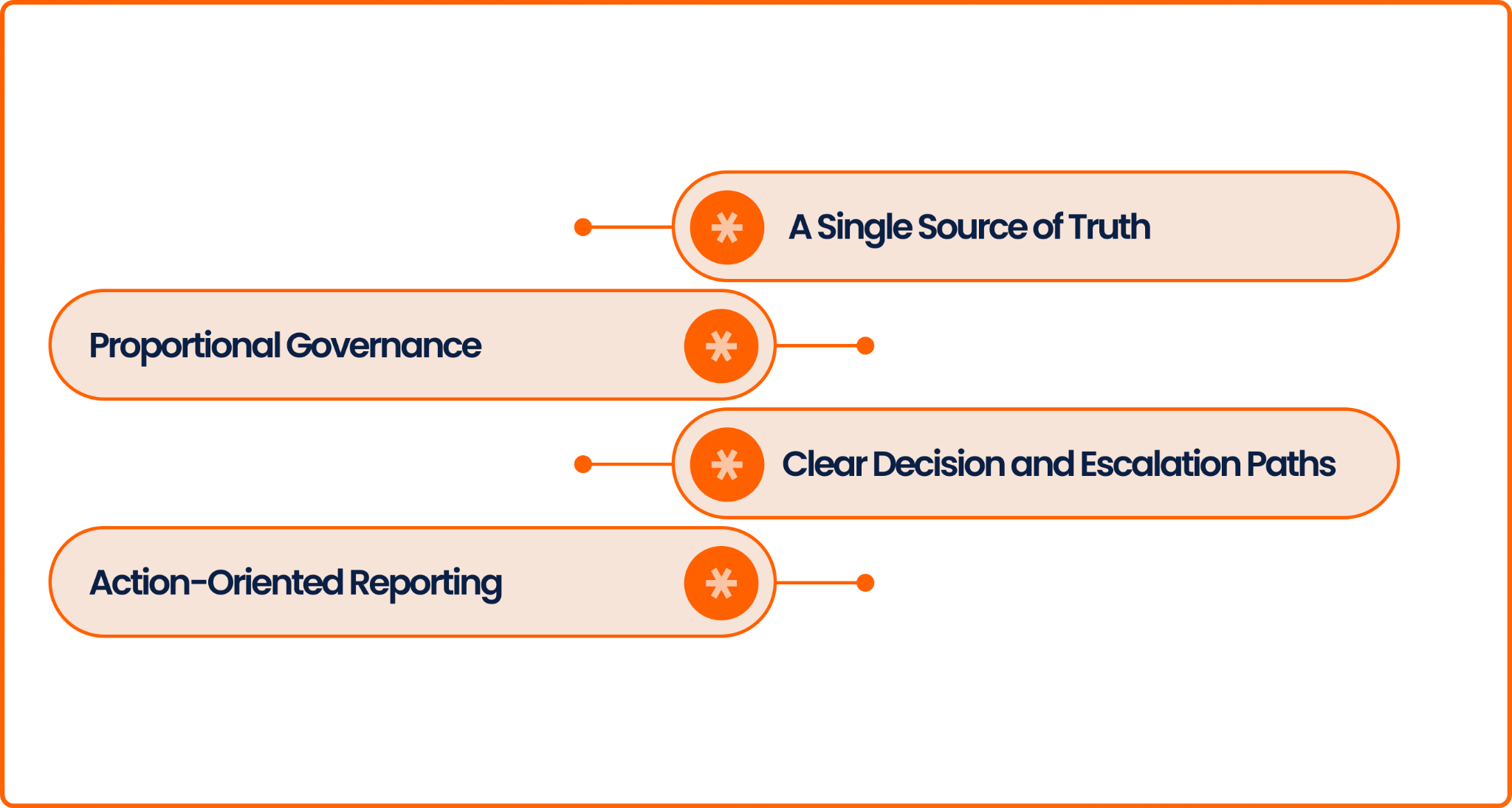
1. A Single Source of Truth
Fragmented data destroys delivery momentum. If project updates are scattered across Slack threads, ClickUp boards, and Google Sheets, leadership lacks real visibility. A lightweight PMO establishes one authoritative location for essential status: owner, timeline, key milestones, blockers, and next actions.
2. Proportional Governance
A low-risk internal tool does not require the same governance as a core payment integration or regulatory update. A lightweight PMO standardises essential practices such as initiation, risk tracking, and closure, while keeping execution flexible based on project risk and scale.
3. Clear Decision and Escalation Paths
Unresolved decisions cause more project delays than technical complexity. A lightweight PMO defines clear boundaries: what a team can resolve autonomously, what requires product leadership, and what must escalate to executives.
4. Action-Oriented Reporting
Reporting should serve one purpose: driving decisions. Weekly updates should simply state what was completed, what is next, what is at risk, and who needs to make an outstanding decision.
The Assurdly Approach: Governance That Serves Execution
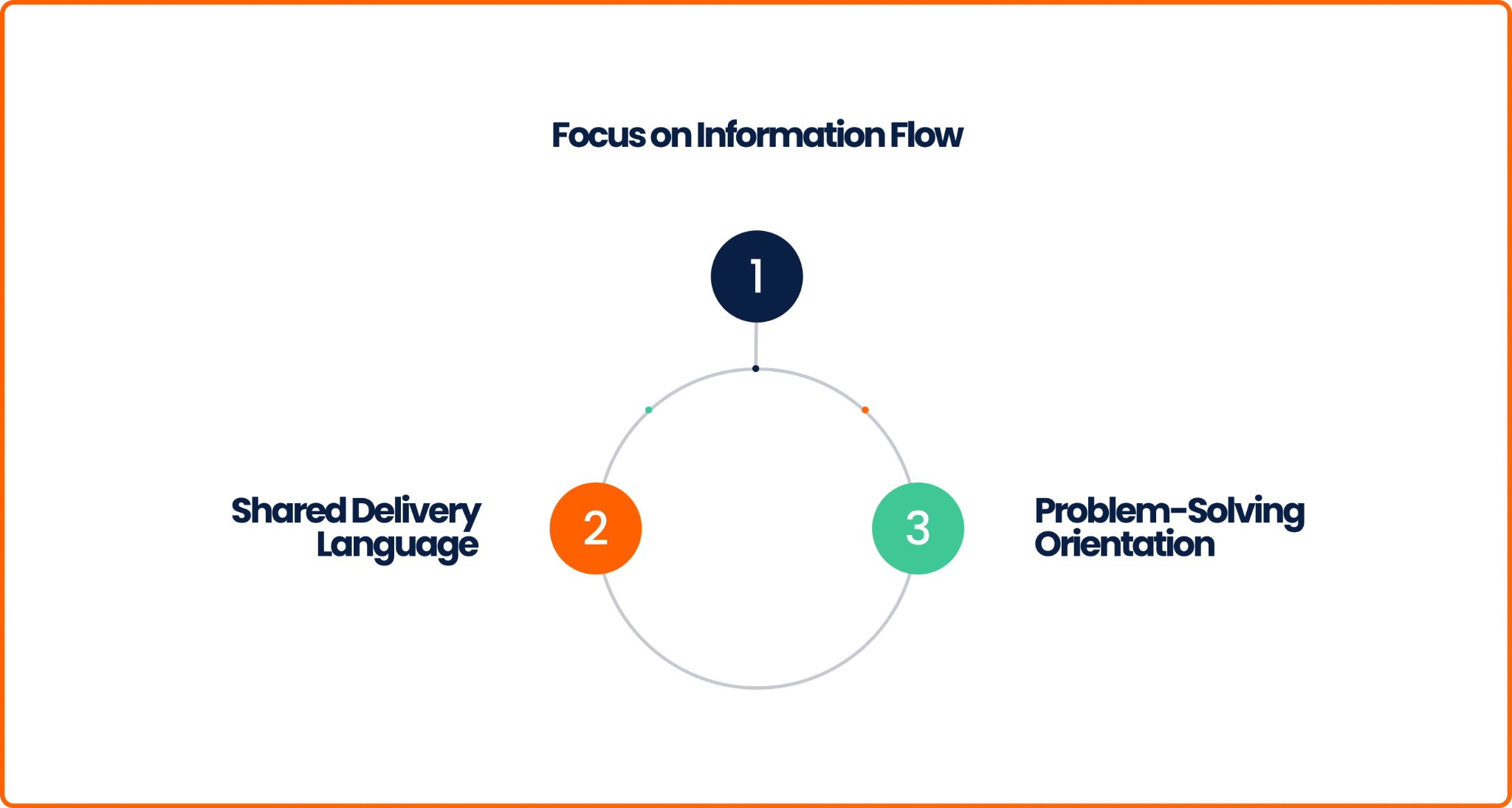
Assurdly designs PMO structures that operate as delivery engines rather than administrative layers. Our approach adapts governance to the complexity and risk of the product ecosystem.
- Focus on Information Flow: We map how work currently moves, identifying where decisions get stuck and where communication breaks down before adding new tools.
- Shared Delivery Language: We establish explicit definitions for status terms so updates are objective and actionable.
- Problem-Solving Orientation: Our delivery leads actively remove blockers, manage cross-team dependencies, and surface key trade-offs to keep work moving.
In Practice: Coordinating Capital Market Digitisation
Digitising complex, multi-stakeholder ecosystems requires structure without administrative gridlock. When the Nigerian Exchange Group (NGX) set out to transform traditional capital market share subscriptions into a digital experience (NGX Invest), coordination was a central challenge.
The initiative required aligning investors, issuers, brokers, registrars, and issuing houses, while building an investor portal, administrative back office, and API Gateway for third-party channels.
Assurdly supported NGX across Product Management, Project Management, Quality Assurance, and Product Support. Instead of imposing heavy bureaucratic overhead, we established clear requirements, decomposed work into weekly deliverables, managed dependencies, and applied early quality checks.
This structured, lightweight approach enabled NGX Invest to smoothly handle its initial rollout to 60,000 investors, expanding to over 100,000 users across web, mobile, and USSD channels.
Why Lightweight PMOs Matter Now
Modern software delivery relies on complex ecosystems where internal product teams, engineering vendors, infrastructure providers, and compliance functions intersect.
As these moving parts multiply, informal communication breaks down. A lightweight PMO acts as the operating system that connects these moving parts, giving leaders transparent visibility while shielding teams from excessive administration.
Building a Delivery System That Scales

A PMO should exist when team growth creates coordination challenges that require a shared operating framework. The best delivery systems are practical and unobtrusive: teams know where information lives, risks are surfaced early, decisions have clear owners, and no one spends their week filling out reports just to prove work is happening.
We help growing organisations deploy the right balance of structure, visibility, and delivery governance to manage complex software initiatives without creating unnecessary bureaucracy.
If your delivery footprint is growing faster than your ability to coordinate it, let us help you build a system that keeps work moving cleanly.