Not every financial infrastructure project begins with the desire to launch something new. Sometimes, the more urgent requirement is to preserve a capability the business already depends on, especially when the platform supporting that capability is being retired.
That was the context for Infinity Trust Mortgage Bank, a mortgage bank in Abuja whose operations depend on structured repayment cycles, customer mandates, predictable debit schedules, and the ability to manage collections over an extended period.
For years, the NIBSS Central Mandate Management System, commonly known as CMMS, supported mandate-related activities for financial institutions. As the platform approached retirement, institutions that depended on it had to determine how they would continue managing mandates and collections without disrupting customers or internal teams.
For Infinity Trust Mortgage Bank, the question was not simply how to connect to another NIBSS service. The real requirement was to preserve its Direct Debit capability and create a more sustainable operational layer around it.
The Problem Was Continuity, Not Just Integration
Financial infrastructure projects are often reduced to the language of integration. Once APIs exist and a connection is made, the assumption is that the work is complete, but in practice, this is rarely the case.
The NIBSS Mandate and EasyPay services provide the infrastructure required to create mandates and initiate debit requests. However, a mortgage bank also needs the surrounding operational capability that allows those services to work within real repayment processes.
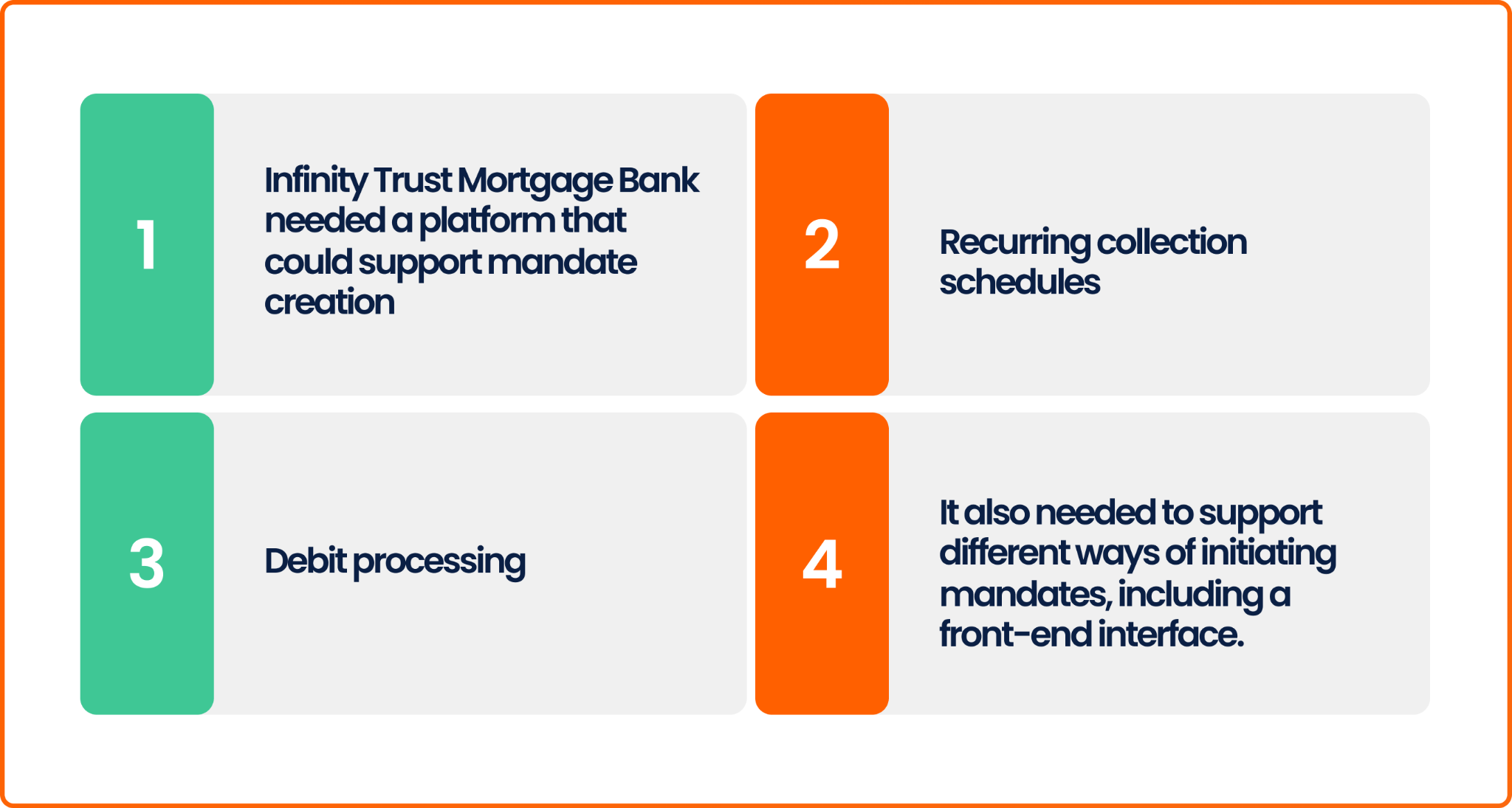
Infinity Trust Mortgage Bank needed a platform that could support mandate creation, debit processing and recurring collection schedules. It also needed to support different ways of initiating mandates, including a front-end interface for operational users and APIs that could connect with internal systems or customer journeys.
This distinction mattered because the retirement of CMMS did not remove the bank’s need to manage Direct Debit; it only removed the central platform previously supporting part of that workflow. What the bank required was not a like-for-like replacement of CMMS, but a Direct Debit platform that could sit on top of the relevant NIBSS services and support its actual repayment operations.
Why The Operational Layer Mattered
Direct Debit is easy to describe at the surface. A customer gives authorisation, a mandate is created, and debits can be initiated against that mandate, but the operational reality is more layered.
For a mortgage bank, collections may run monthly over many years. Mandates may need to be tracked, updated, monitored and acted on by internal teams. Repayment schedules need to reflect agreed customer obligations, and collections must happen in a predictable manner without relying on manual intervention at every cycle.
The NIBSS services enabled the bank to create and debit mandates, but the scheduling and workflow layer still had to be provided by the institution’s own system. This was the gap Assurdly’s Direct Debit platform was designed to close.
How Assurdly Delivered The Solution
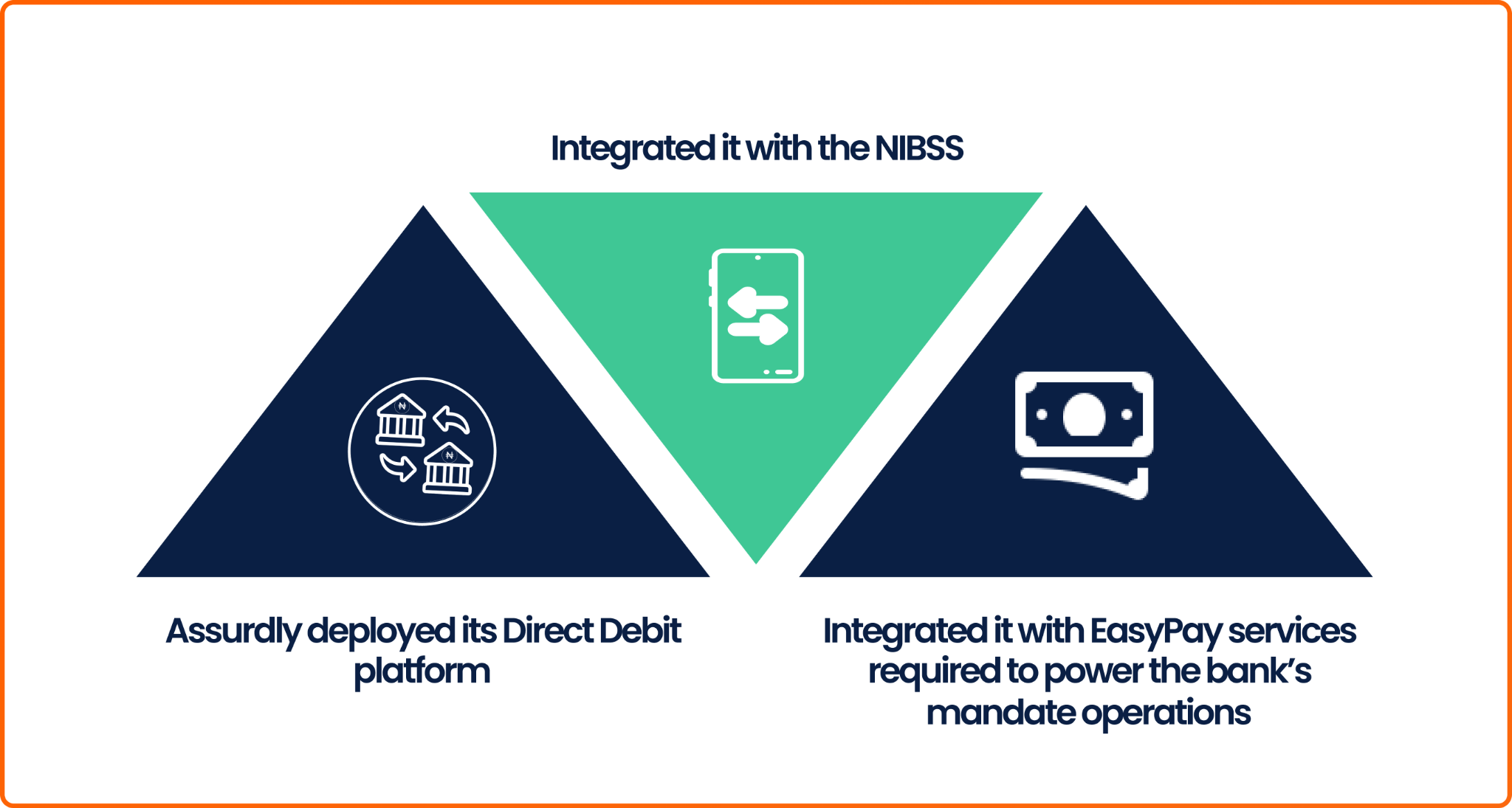
Assurdly deployed its Direct Debit platform for Infinity Trust Mortgage Bank and integrated it with the NIBSS Mandate and EasyPay services required to power the bank’s mandate operations.
The Mandate service provided the foundation for creating and managing customer authorisations, while EasyPay supported the debit processing required for collections. Around both services, Assurdly provided the operational platform that allowed the bank to use these capabilities in a structured and business-aligned way.
Through the platform, Infinity Trust Mortgage Bank could create mandates from a front-end interface, initiate mandate creation through APIs, manage mandate records, and schedule collections based on the repayment frequency required for its customers.
This meant the implementation did not stop at technical connectivity. It translated the underlying NIBSS services into a usable Direct Debit operation for the bank’s teams.
What Changed For Infinity Trust Mortgage Bank
With the platform in place, Infinity Trust Mortgage Bank was able to move beyond its dependency on CMMS while continuing to support mandate-based collections.
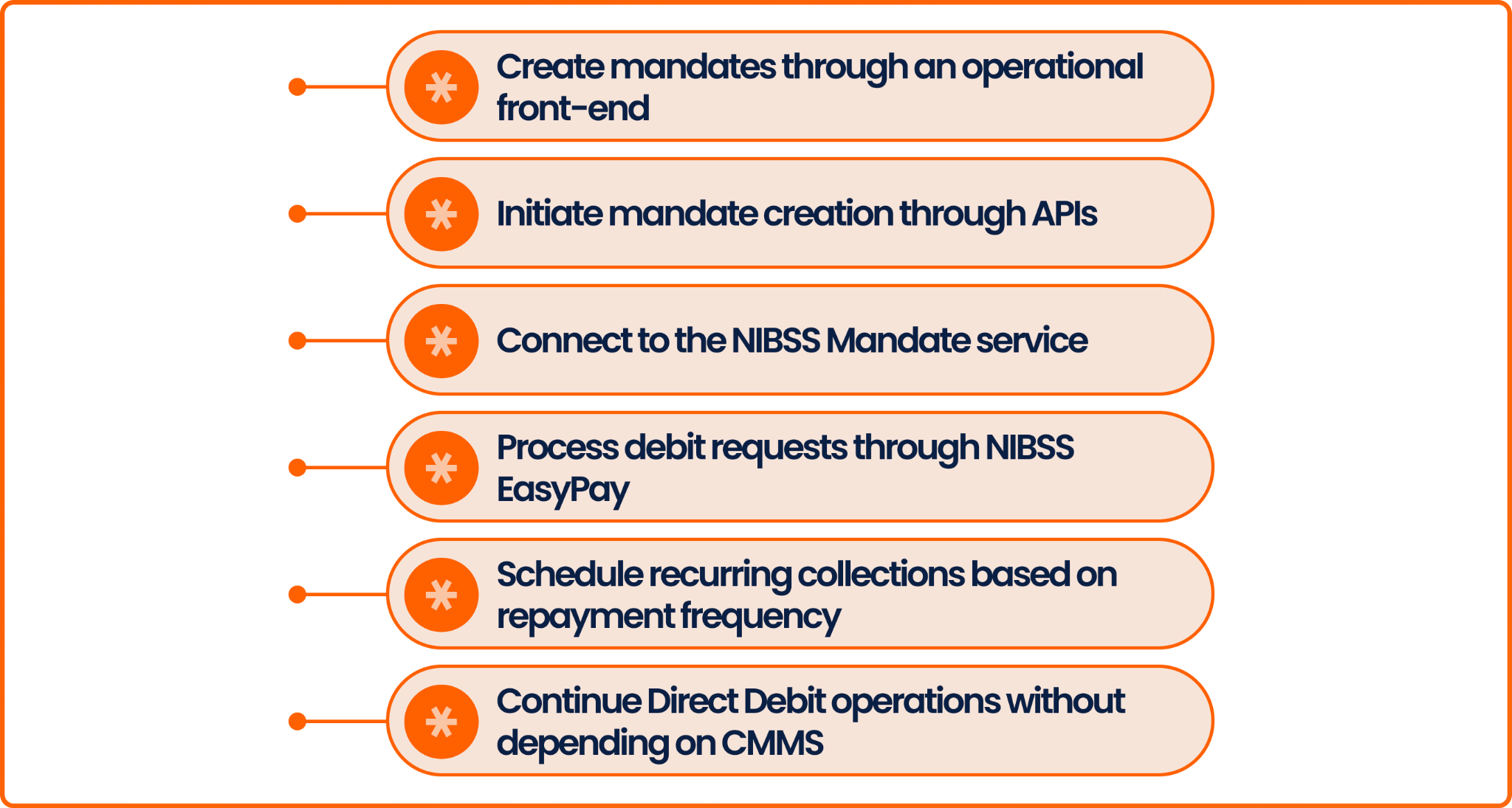
The bank now had a Direct Debit platform that allowed it to:
- Create mandates through an operational front-end
- Initiate mandate creation through APIs
- Connect to the NIBSS Mandate service
- Process debit requests through NIBSS EasyPay
- Schedule recurring collections based on repayment frequency
- Continue Direct Debit operations without depending on CMMS
For a mortgage bank, this was an important shift. The value was not only in being reconnected to NIBSS, but in having a platform that reflected how recurring repayment operations actually work.
Reusable Infrastructure As A Delivery Advantage
The Infinity Trust Mortgage Bank implementation reinforced one of the principles behind Assurdly’s work in financial infrastructure.
Every institution should not have to rebuild the same foundational integrations from scratch each time an ecosystem service changes. As platforms evolve, institutions need infrastructure that can adapt without turning every change into a long and high-risk delivery cycle, especially in regulated financial services where business continuity, customer trust and operational reliability are closely connected.
Assurdly’s NIBSS-in-a-Box approach is built around this principle. The common infrastructure is reusable, while each implementation can still be adapted to the specific needs of the institution.
In Infinity Trust Mortgage Bank’s case, the requirement was focused on Direct Debit. Rather than deploying every available NIBSS service, Assurdly deployed the specific capability the bank needed and configured the platform around its operational reality.
The Outcome
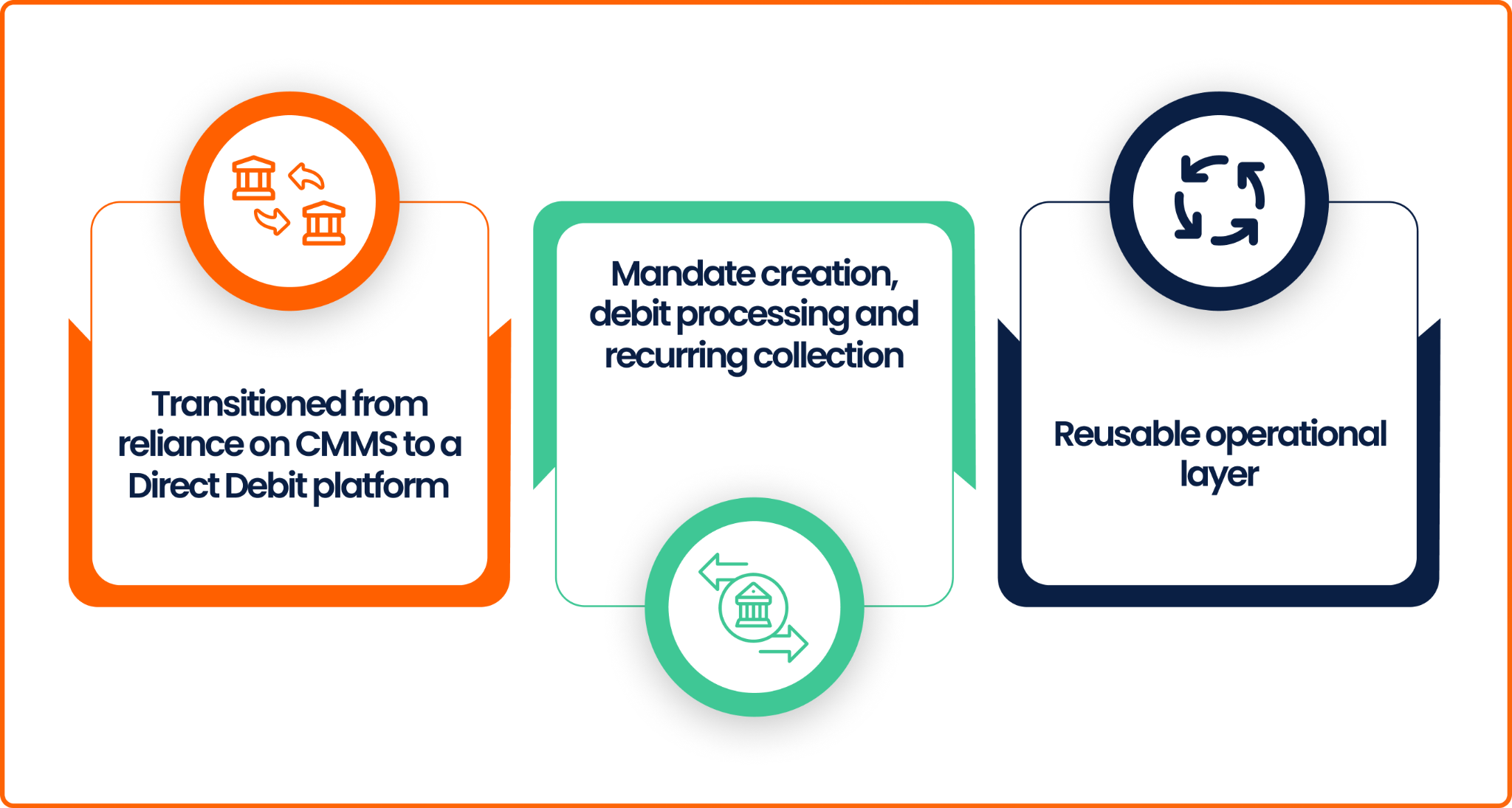
Infinity Trust Mortgage Bank transitioned from reliance on CMMS to a Direct Debit platform integrated with the NIBSS Mandate and EasyPay services.
The implementation allowed the bank to continue mandate creation, debit processing and recurring collection scheduling without disruption to its Direct Debit operations.
More importantly, the bank now had a reusable operational layer that was not dependent on a retiring central platform. It could manage mandates through a front-end interface, connect through APIs where required, and operate collections in line with the repayment structures that define mortgage banking.
Conclusion
The Infinity Trust Mortgage Bank project was not simply another NIBSS integration. It was a continuity project that addressed the risk created by the retirement of CMMS and ensured that a critical collection capability could continue through a more sustainable Direct Debit platform.
By combining reusable infrastructure with the specific operational needs of a mortgage bank, Assurdly helped Infinity Trust Mortgage Bank preserve an important part of its business while preparing it for a financial infrastructure environment that will continue to evolve.