.jpg)
Overview
As financial products grow, the systems behind them have to mature with the business, especially where speed, reliability, visibility and customer trust are central to how the product works. What supports an institution at the early stage is not always enough when transaction volumes increase, customer expectations rise, and the business needs to take fuller control of the infrastructure powering its services.
For many fintechs and licenced financial institutions, the early path to market often depends on third-party providers that make it easier to launch payment services quickly. That model is useful because it helps the business validate demand, serve customers and avoid the full complexity of direct integration at the beginning. However, as the business scales, the same model can begin to limit cost control, operational visibility, service flexibility and the speed with which issues can be investigated or resolved.
PocketApp had reached that point in its growth. As a payments and social commerce platform associated with PiggyVest, with use cases across transfers, cards, group accounts, business pockets, bill payments and merchant payments, the business needed a stronger foundation for managing the rails behind its financial products.
Assurdly was engaged to support this transition by helping PocketApp move towards direct Nigeria Inter-Bank Settlement System (NIBSS) connectivity, starting with the services required for its existing payment operations and extending into the broader NIBSS suite needed for its current and future use cases. The engagement began with NIP as the dominant instant payment rail, but became even more important as Nigeria’s payment infrastructure started moving from NIP into NPS.
About PocketApp
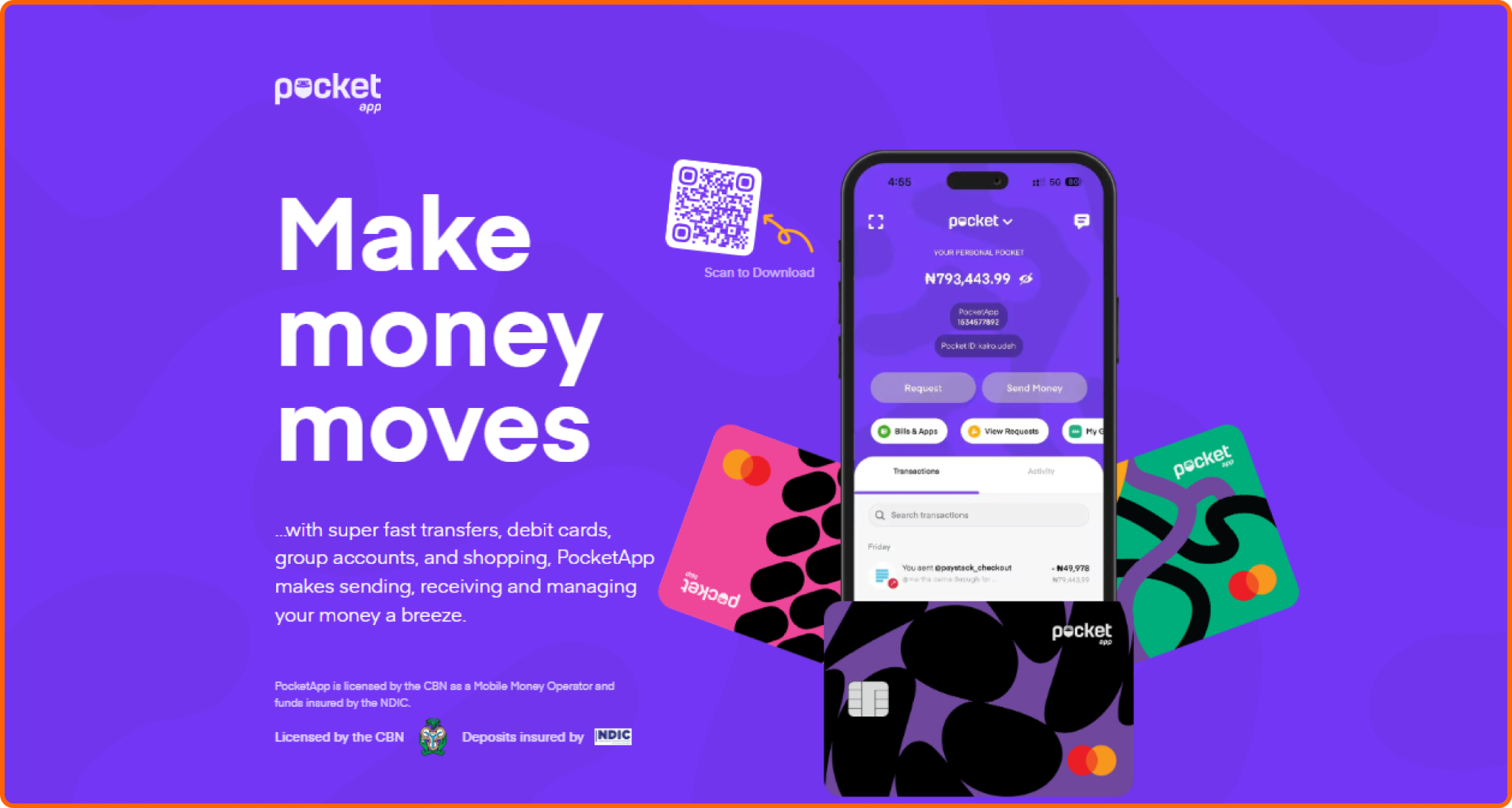
PocketApp is a mobile money and payments platform built to help users send, receive, spend and manage money across personal, business and group contexts. The platform supports everyday money movement, debit cards, group accounts, bill payments, business pockets and shop features, which makes its payment experience relevant to both individual users and small businesses.
This kind of product footprint places real demand on the systems behind the experience. When users expect transfers to complete quickly, wallets to fund smoothly, payment confirmations to arrive reliably and business transactions to be traceable, the integration layer becomes part of the customer experience and, by extension, part of the institution’s ability to retain trust.
For PocketApp, the move towards more direct NIBSS connectivity was therefore not simply a technical upgrade. It was a strategic infrastructure decision that supported the business need to improve operational control, reduce dependency on third-party routing, and prepare for the new payment architecture being introduced through NPS.
The Need For Direct Infrastructure Ownership
Before this engagement, PocketApp had relied on a third-party provider to support its NIP integration and related payment services. That model had served an important purpose at the time because it gave the business access to the rails it needed without requiring the team to manage every layer of the integration directly.
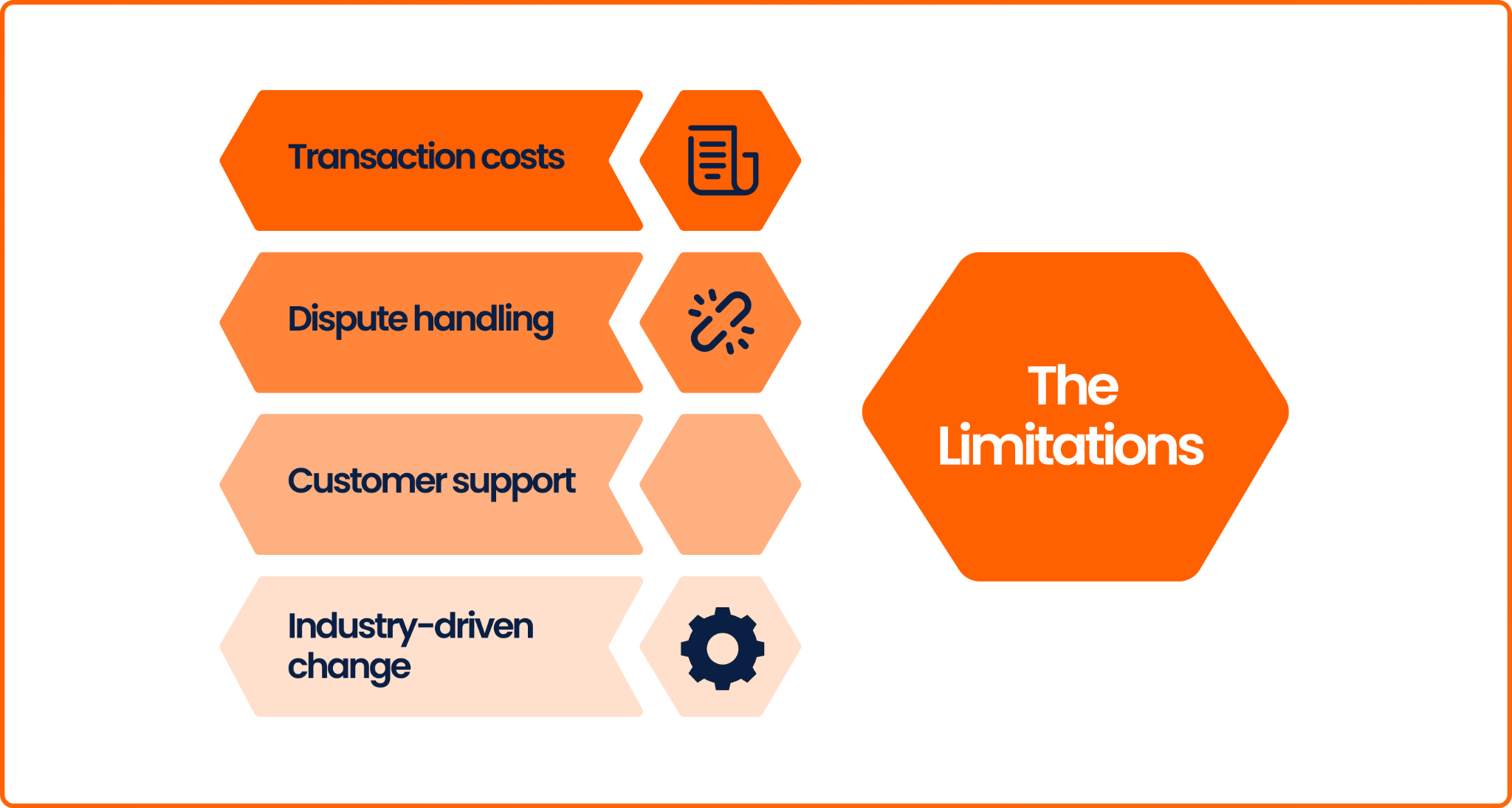
As the platform scaled, however, the limitations of that approach became more visible. Payment infrastructure decisions affect more than engineering architecture because they influence transaction costs, dispute handling, customer support, reconciliation, settlement confidence, operational response time and the institution’s readiness for regulatory or industry-driven change.
PocketApp needed a structure that would reduce those constraints without making every NIBSS service a separate and difficult implementation effort. The requirement covered a broader suite of services aligned with its payment, verification and compliance needs, including NIP, NPS, Easypay, mandate-related services, NQR, FAS, TIN Verification and BVN Watchlist.
Assurdly’s Role
Assurdly implemented the NIBSS integration required to help PocketApp move from third-party dependency towards a more direct, maintainable and extensible service layer. The work was delivered through Assurdly’s NIBSS-in-a-Box approach, which provides a structured middleware layer for connecting financial institutions to NIBSS services in a way that can fit into their existing product and engineering environment.
Rather than treating each NIBSS service as a standalone integration with its own complexity, the approach gave PocketApp a cleaner route to the services required for its business. This was important because PocketApp did not only need to process transfers; it needed a foundation that could support money movement, verification, compliance checks and future service expansion without forcing the team to repeatedly start from scratch.
The initial focus was on enabling the services required for PocketApp’s payment operations, particularly NIP for transfer services. As the payment infrastructure landscape evolved and NPS became the replacement path for NIP, the same engagement also positioned Assurdly to support PocketApp’s readiness for the new NIBSS service architecture.
From NIP As The Starting Point To NPS As The Future Rail
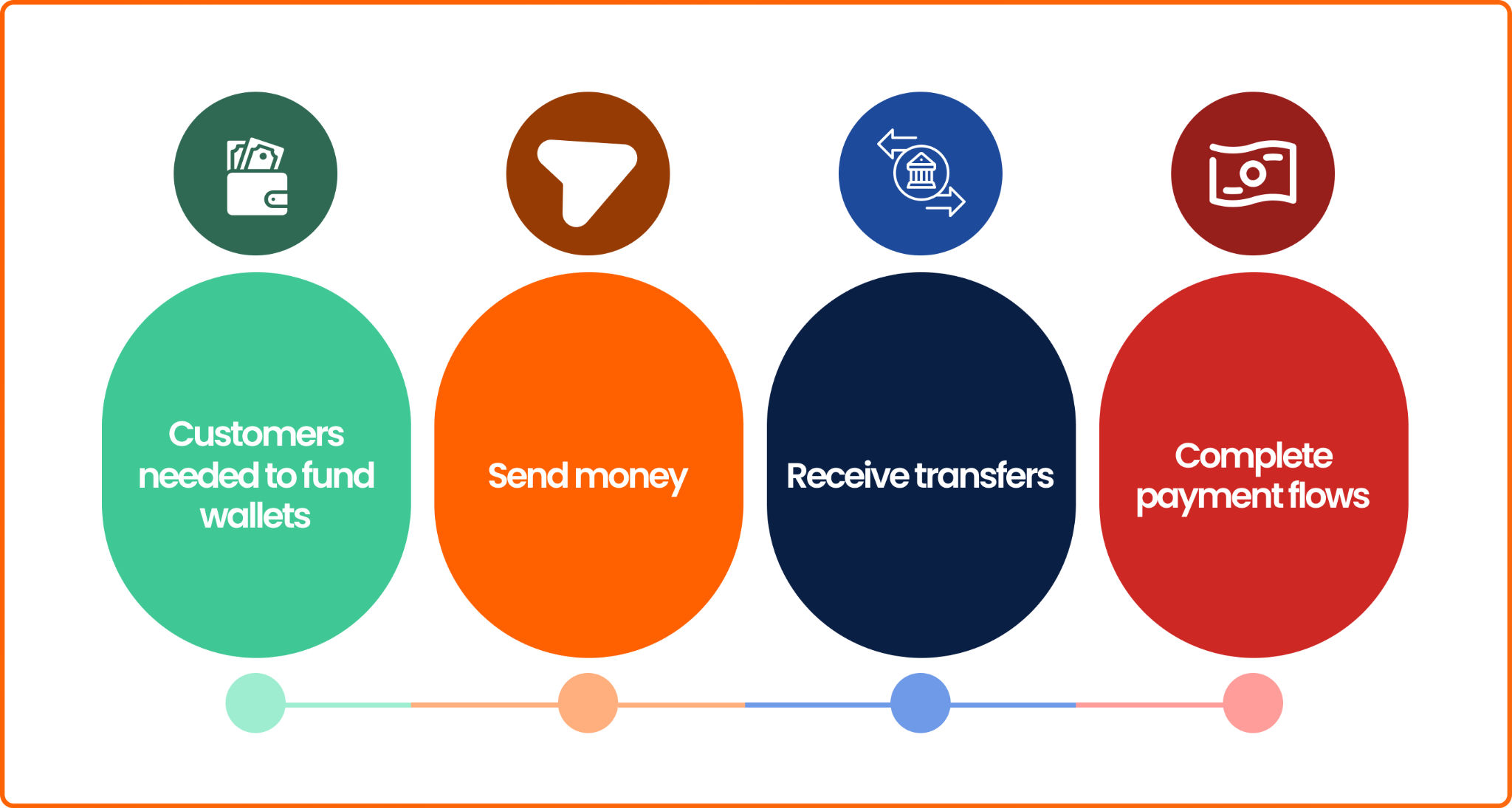
NIP was the natural starting point because, for years, it has been the critical rail for instant funds transfer between banks and licenced financial entities in Nigeria. For a platform like PocketApp, NIP connectivity mattered because customers needed to fund wallets, send money, receive transfers, and complete payment flows with confidence.
Assurdly supported PocketApp in moving its transfer services into a structure that gave the business stronger oversight than the previous third-party-dependent model. The integration was therefore not only about enabling transactions, but also about improving how PocketApp could see, manage and respond to activity across its payment flows.
That timing mattered because NIP is now being replaced by NPS as Nigeria’s instant payment infrastructure evolves. NPS is not just another service sitting beside NIP; it is the new direction of the national payment stack, designed to build on the legacy of NIP while supporting a broader and more modern payment ecosystem.
For PocketApp, this meant the infrastructure conversation could not stop at NIP. A transfer integration that only solved for the old rail would have addressed an immediate need but left the business exposed to another round of major rework as NPS became the industry requirement. Assurdly’s role therefore extended into helping PocketApp align with the NPS transition while expanding the service coverage around its wider use cases.
Extending The Integration Across The NIBSS Suite
PocketApp’s requirement was not limited to one payment rail because its product model cuts across different forms of money movement, customer onboarding, account usage, business payments and compliance checks. This made it important to implement a broader NIBSS service layer that could support the institution beyond basic transfer processing.
The engagement therefore covered services such as Easypay, mandate-related capabilities, NQR, FAS, TIN Verification and BVN Watchlist, alongside the NIP and NPS work. These services matter because a growing financial institution does not only need to move money; it also needs to verify users, manage risk, support compliance expectations and provide payment experiences that are dependable across different customer scenarios.
The Outcome
Through this engagement, Assurdly helped PocketApp move from third-party-supported NIP connectivity towards a more direct and future-ready NIBSS integration model. The work supported PocketApp’s transfer services while also preparing the business for the NPS transition that is now replacing NIP as Nigeria’s payment infrastructure evolves.
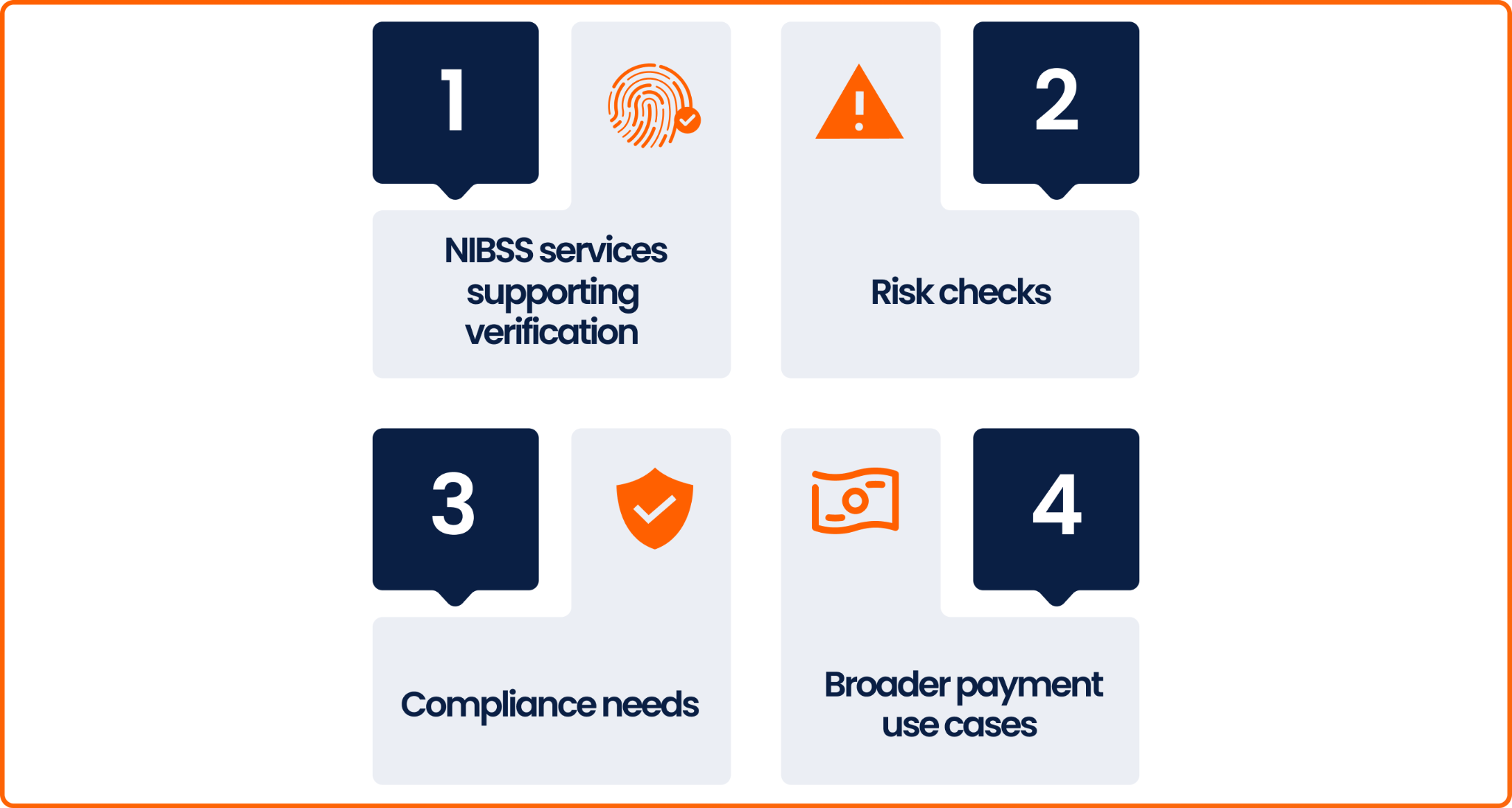
PocketApp also expanded its service coverage beyond transfers, with additional NIBSS services supporting verification, risk checks, compliance needs and broader payment use cases. This gave the business a stronger operating base for serving customers, supporting internal teams and adapting to changes in the national payment ecosystem.
For PocketApp, the outcome was greater visibility over the services powering customer transactions, improved readiness for NPS, and a more maintainable structure for future NIBSS-related requirements. For Assurdly, the engagement reinforced a principle we have seen across multiple implementations: institutions do not only need access to national payment infrastructure, but they also need a practical integration layer that reflects how they actually operate.
Conclusion
PocketApp’s journey shows what happens when a financial product moves from early-stage dependence to a more mature infrastructure model. The business had already grown into a platform where payments were not just a feature, but a core part of the customer and merchant experience.
By implementing direct NIBSS connectivity and extending the service layer into NPS, FAS, TIN Verification, BVN Watchlist and other relevant services, Assurdly helped PocketApp strengthen the foundation behind its payment operations. The work started from the immediate need to support transfer services more directly, but it also aligned PocketApp with the NPS transition reshaping Nigeria’s instant payment infrastructure.
The result is not just an integration, but a stronger operating base for a platform serving users and businesses across Nigeria. At Assurdly, this is the kind of work we believe matters because the real value is not only in helping institutions connect to national infrastructure, but in helping them build the kind of service layer that can support scale, compliance and long-term product growth.