
For many licensed financial institutions, Nigeria Inter-Bank Settlement System integration starts with urgency. The business is ready to launch, the product team has timelines to defend, engineering is confident the work can be done, and customers or partners are already waiting for the capability to go live. At that point, the expectation is usually straightforward: once access is granted and development begins, the institution should be able to move quickly towards certification and production.
In practice, the timeline is rarely determined by development effort alone. What often slows the process is the number of dependencies that must align before an institution can move confidently from request to testing, certification and go-live. Service eligibility must be clear, onboarding requirements must be prepared, credentials must be complete, connectivity must be validated, IP whitelisting must be confirmed, internal systems must behave correctly, and production readiness must not be left until the final stage.
This does not mean the process is unnecessarily difficult. NIBSS sits at the centre of Nigeria’s payment infrastructure, so it is expected that access, certification and production activation will require structure and control. The real issue is that many institutions enter the process without sequencing the work properly, which means blockers are discovered only after they have already started affecting the timeline.
Start With The Actual Service Scope
The first step is to define exactly what the institution is integrating. NIBSS integration should not be treated as one broad technical activity because each service has its own eligibility, configuration, operational implication and certification path. NIP outward, NIP inward, NQR, direct debit, verification services and consent-based identity services do not all place the same demand on the institution.
This clarity matters because service scope affects everything else. An institution enabling outward transfers is not preparing for the same operational reality as one enabling inward transfers into customer accounts. Inward transfer capability requires the core banking, wallet or ledger system to handle account validation, credit posting, reversals, duplicates, timeouts and exception responses correctly. If those expectations are not understood early, the institution may assume it is ready until certification exposes gaps that should have been addressed before formal testing began.
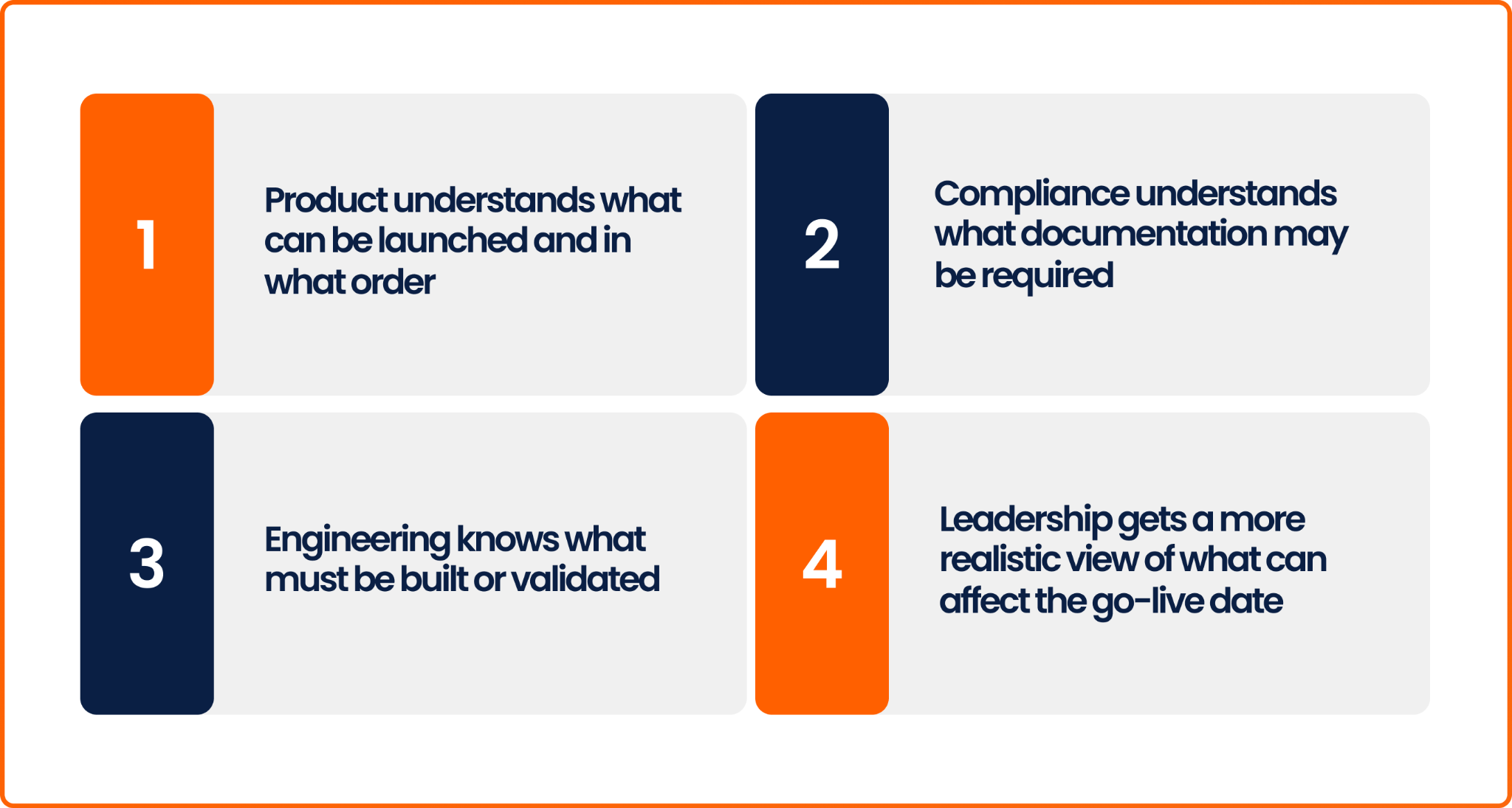
A properly scoped integration gives the project a stronger foundation. Product understands what can be launched and in what order, engineering knows what must be built or validated, compliance understands what documentation may be required, and leadership gets a more realistic view of what can affect the go-live date. Without this clarity, the project starts with activity but not enough precision.
Prepare Onboarding Before It Becomes Urgent
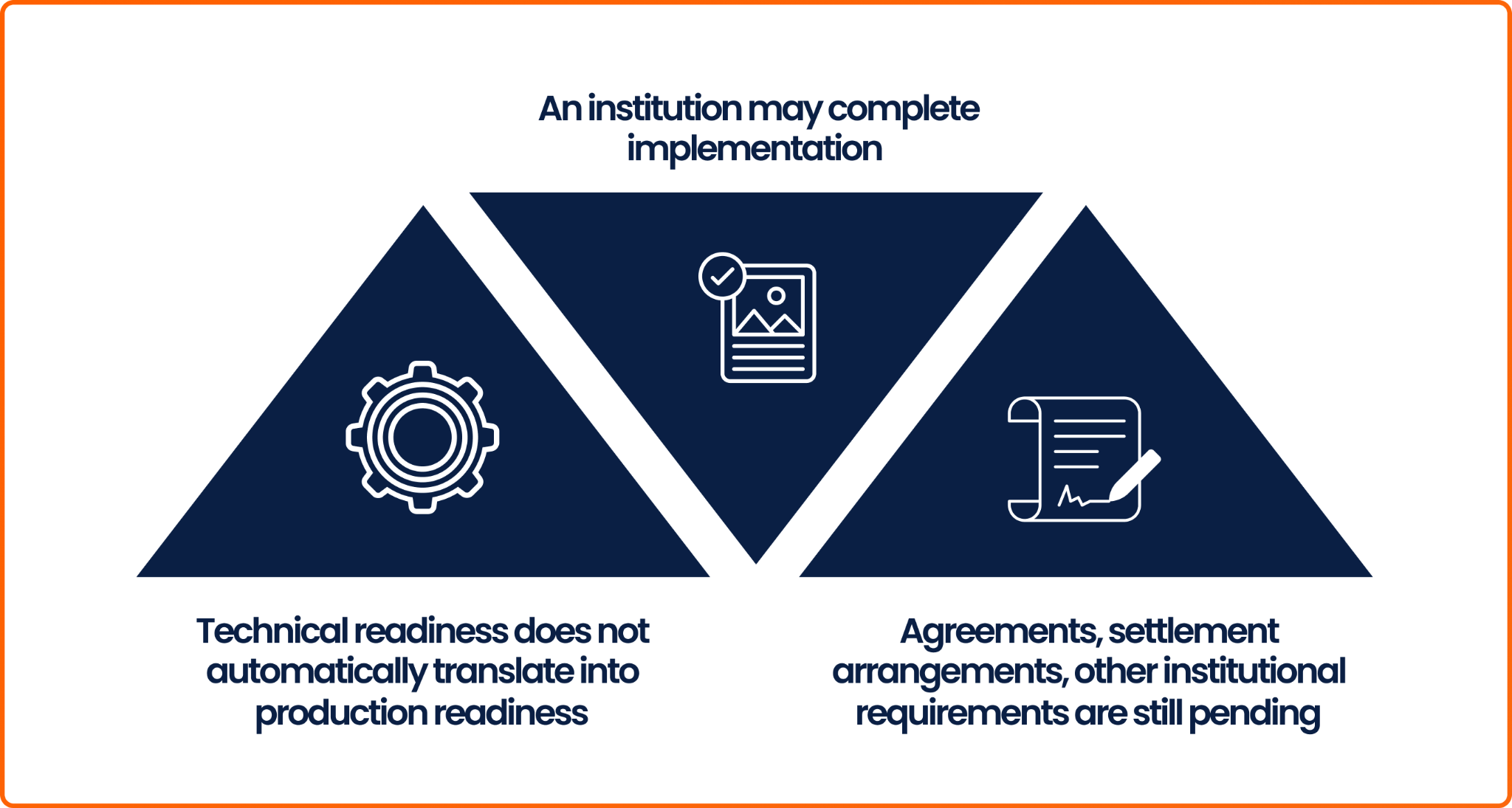
Technical readiness does not automatically translate into production readiness. An institution may complete implementation and still be unable to go live if onboarding documentation, agreements, settlement arrangements, internal approvals or other institutional requirements are still pending. When this happens, the project becomes difficult to defend because the team appears close to launch, but production activation is still dependent on non-technical items.
The better approach is to run onboarding preparation alongside technical delivery from the start. Required documents should be identified early, ownership should be assigned, approvals should be tracked, and settlement-related dependencies should not wait until production testing is imminent. Where relationship managers, settlement banks or internal compliance teams need to provide input, their role should be built into the delivery plan instead of being treated as a late-stage follow-up.
This is one of the most common areas where time is lost. Institutions sometimes treat onboarding as separate from integration, but in reality, it is part of the same go-live path. Passing certification matters, but it does not remove the need for the institution to be operationally ready for production.
Validate Access Before Deep Implementation
Environment readiness is another area where small gaps can create significant delays. An institution may believe it has what it needs to begin, only to discover that credentials are incomplete, an institution identifier is missing, an IP has not been whitelisted correctly, gateway access requires another layer of configuration, or a service-specific requirement was not included in the original request. Each issue may look minor on its own, but together they create the stop-start rhythm that makes integration timelines difficult to manage.
Access validation should therefore be treated as an early delivery checkpoint. Before the team builds too far into implementation, the project should confirm that the right credentials have been received for the selected services, that those credentials are active in the relevant environment, that endpoints are reachable, that whitelisting has been actioned correctly, and that any service-specific identifiers required for testing are available.
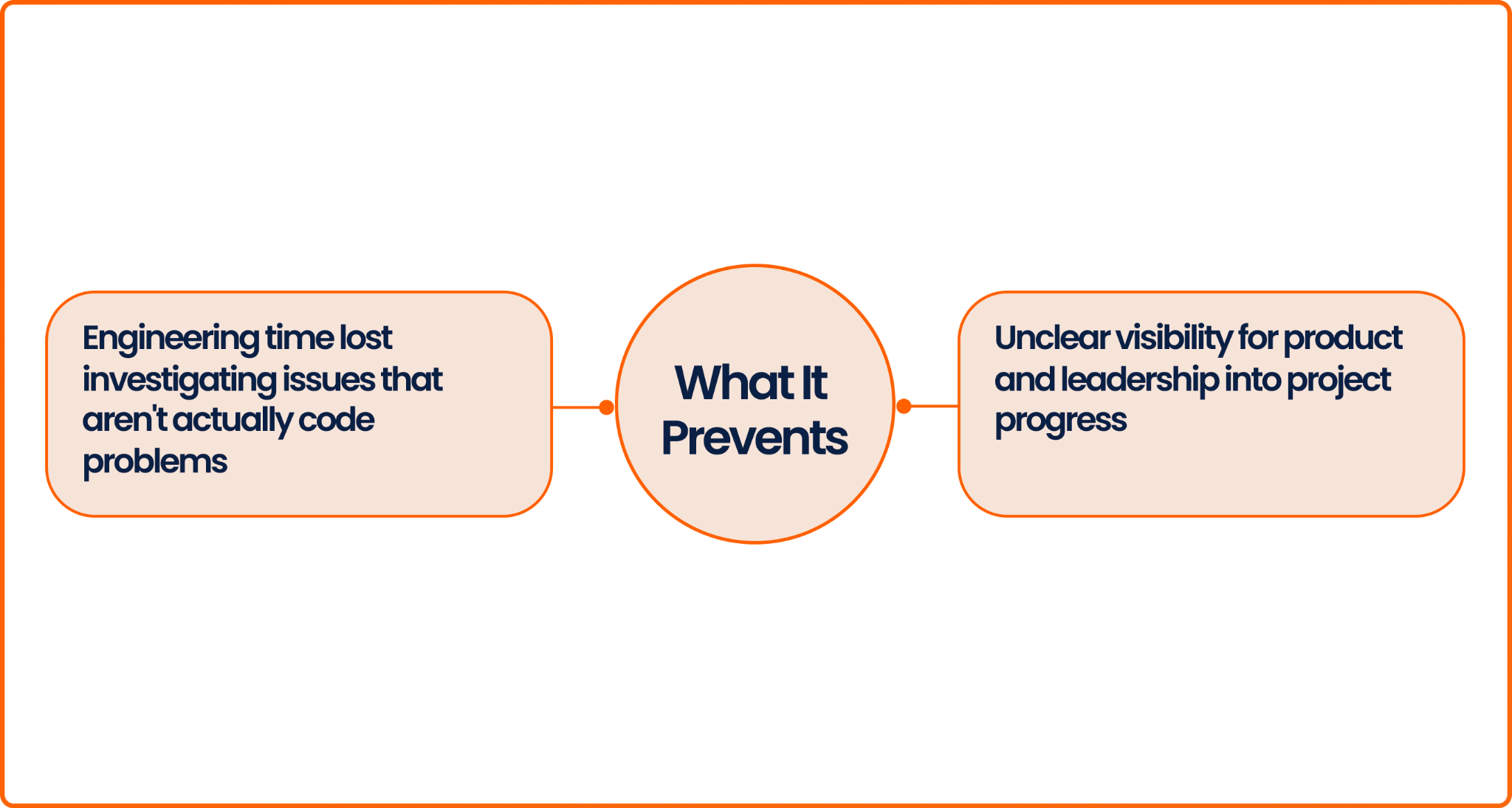
This prevents engineering teams from spending valuable time investigating issues that are not actually code problems. It also gives product and leadership a clearer picture of whether the project is genuinely progressing or simply waiting on unresolved setup dependencies.
Do Not Let Certification Become The First Real Test
Certification should validate prepared behaviour, not expose basic readiness gaps for the first time. It is not enough for an institution to show that it can send a request or receive a response. The system must behave correctly under defined conditions, including transaction success, failure, reversals, timeouts, exceptions, state management and reconciliation visibility.
This is especially important for inward flows, where the institution’s core banking, wallet or ledger system must respond properly across different transaction scenarios. If these behaviours are only tested during formal User Acceptance Testing (UAT), every gap discovered becomes a certification delay. The team must investigate, correct, prepare evidence and return for further validation, which can extend the timeline even when the issue itself is fixable.
A stronger approach is to run internal pre-certification validation. Product, engineering and QA should simulate likely scenarios, confirm expected responses, review exception handling and resolve gaps before formal testing begins. This does not replace NIBSS certification, but it reduces the likelihood that certification becomes the most expensive point at which the institution discovers its own readiness gaps.
Better Sequencing, Faster Go-Live
NIBSS integration without the usual delays is not about cutting corners or rushing a regulated process. It is about understanding the journey well enough to prepare for each stage before it becomes urgent. Institutions that move faster are usually the ones that clarify service scope early, prepare onboarding requirements in parallel, validate access before deep implementation, test internal system behaviour before certification, and manage each dependency with clear ownership.
Assurdly supports this journey through a structured NIBSS integration approach shaped by repeated delivery across licensed institutions. The focus is not only on connecting to services, but on helping institutions reduce avoidable delays, enter certification better prepared and move towards production with clearer visibility.
For MFBs, PSPs, Finance Houses, Mobile Money Operators and other regulated financial institutions, this matters because integration timelines affect product launches, customer readiness, revenue plans and market confidence. When the process is sequenced properly, go-live becomes less uncertain, certification becomes less surprising, and the institution can move with far more confidence.