
Most institutions do not fail at Nigeria Inter-Bank Settlement System (NIBSS) integration. They get delayed.
What is scoped as a four to six-week integration quietly turns into three to six months. Not because the integration is impossible, but because the friction points are discovered too late.
NIBSS integration is not just technical work. It is sequencing, institutional readiness, core banking alignment and disciplined interaction with NIBSS itself.
When those elements are not aligned from the start, timelines stretch.
When they are aligned deliberately, go-live timelines can be significantly shorter. In our experience, when the nuances are addressed from day one, production readiness can be achieved in under a month.
The difference is not speed. It is preparation.
The Technical Layer Is Only The Beginning
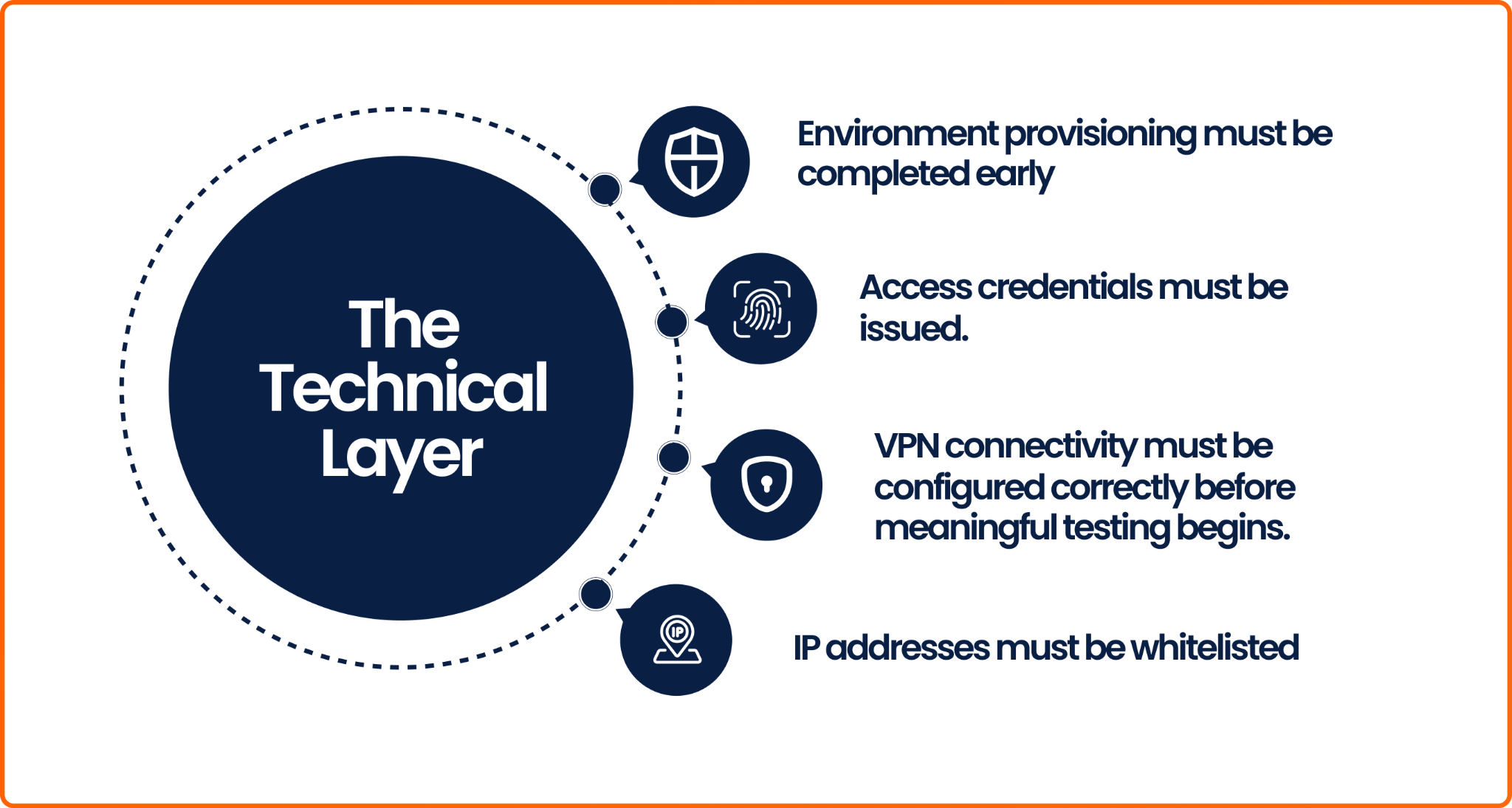
Environment provisioning must be completed early. Access credentials must be issued. IP addresses must be whitelisted. VPN connectivity must be configured correctly before meaningful testing begins.
If sequencing is loose, development proceeds on assumptions. Those assumptions later require correction.
Certification is strict. Message formats must align precisely with NIBSS specifications. Field structures, response handling and validation rules are not flexible. Small gaps lead to repeated rejection cycles. Each cycle consumes time.
These are the visible delays.
What institutions underestimate is how much internal readiness determines speed.
The Core Banking Readiness Gap

One of the most underestimated delays sits inside the institution’s own system.
NIBSS Instant Payment (NIP) integration requires the institution’s core banking platform to accommodate more than sixty defined test scenarios. These scenarios cover inward transfers, response handling, reversals, timeouts, error propagation and edge conditions.
During NIP inward UAT, NIBSS personnel execute these scenarios themselves.
If the core banking logic does not accommodate all required flows, testing cannot proceed. When testing stalls, NIBSS moves on to the next institution in its queue.
That lost testing window often adds weeks to delivery.
Many institutions approach UAT believing they are ready, only to discover during live testing that certain logic paths were never implemented. Fixing those gaps mid-certification introduces rework and resets momentum.
One of the most effective delivery efficiency steps is pre-validating the core banking system internally against these NIP scenarios before NIBSS UAT begins. When inward logic and expected responses are tested ahead of time, NIBSS testing proceeds without blockers.
That single step significantly shortens certification cycles.
Onboarding Is The Production Gatekeeper

Technical readiness does not equal production readiness.
Production activation is often dependent on institutional onboarding completion. Compliance documentation must be current. Required agreements must be executed. Settlement banking arrangements must be confirmed where applicable.
For Microfinance Banks and other regulated institutions, coordination with a settlement bank is frequently required. If agreements are not executed or sign-offs are delayed, production cannot proceed.
Institutions sometimes complete technical certification yet remain blocked because onboarding requirements are incomplete.
Speed depends on institutional responsiveness. Documentation must be prepared early. Settlement relationships must be aligned before they become urgent. Onboarding must move in parallel with technical delivery.
Communication Discipline Shortens Testing Cycles
How an institution interacts with NIBSS during testing also affects timelines.
When something fails, vague escalation slows resolution. Clear escalation accelerates it.
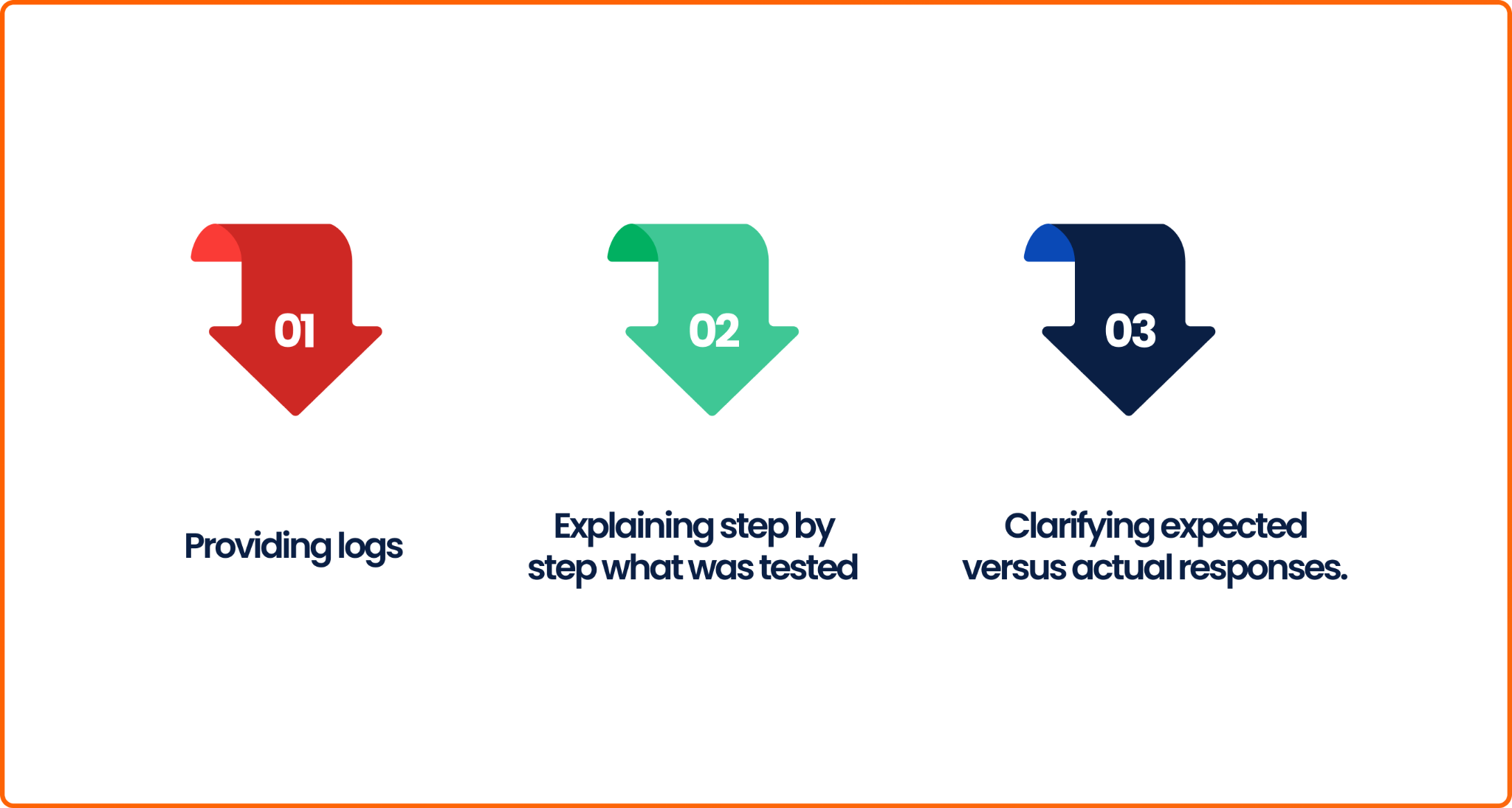
Providing logs. Explaining step by step what was tested. Clarifying expected versus actual responses. This allows NIBSS personnel to diagnose quickly and intervene decisively.
Institutions that treat communication as part of execution move through certification more efficiently.
Where Structured Integration Makes The Difference
After delivering NIBSS integrations repeatedly, patterns become predictable.
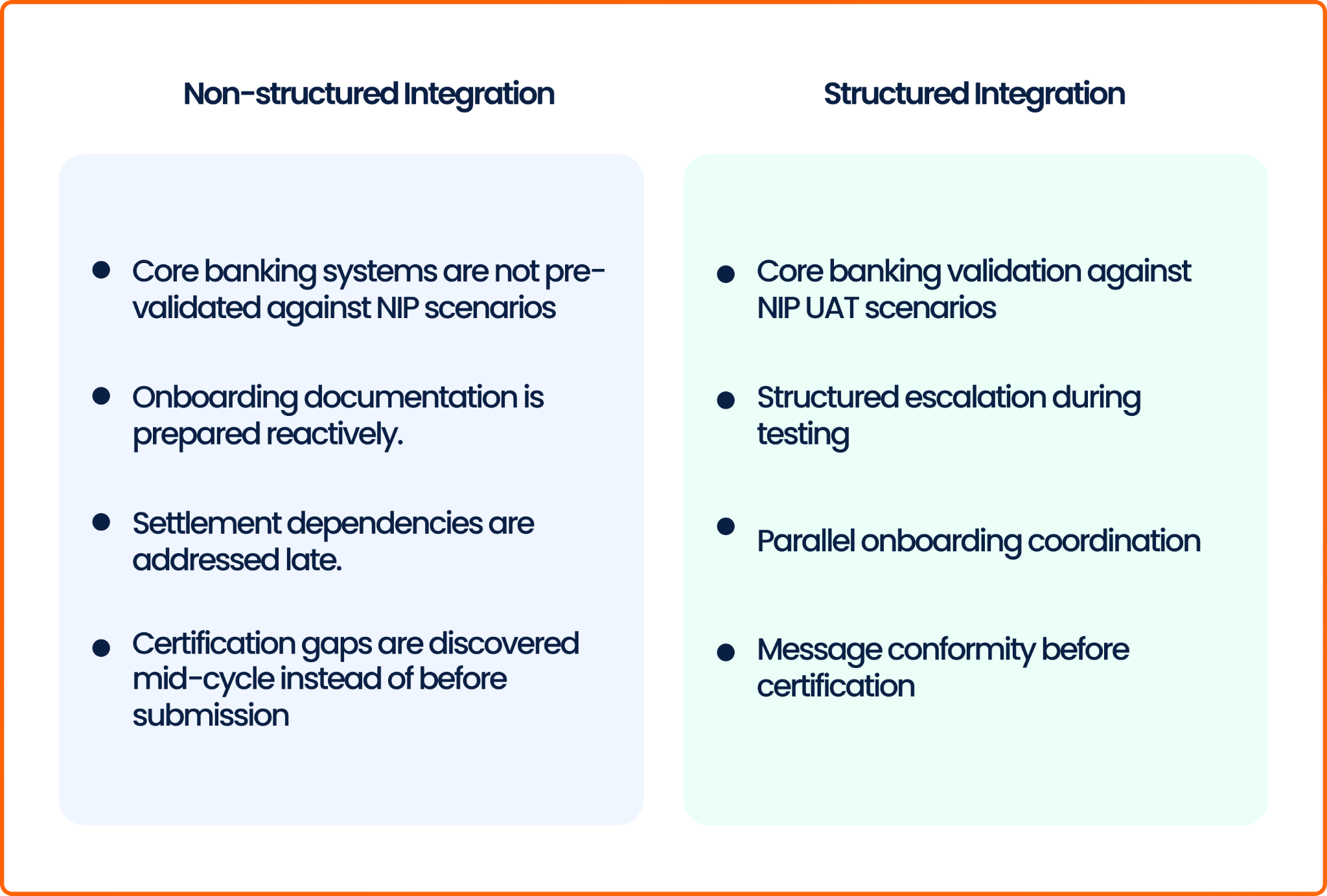
Core banking systems are not pre-validated against NIP scenarios.
Onboarding documentation is prepared reactively.
Settlement dependencies are addressed late.
Certification gaps are discovered mid-cycle instead of before submission.
This is precisely why Assurdly built NIBSS-in-a-Box.
It was not created to bypass the process. It was designed to structure it properly. The framework embeds early connectivity validation, message alignment and core banking pre-testing into a repeatable integration model.
Instead of treating each NIBSS engagement as a fresh experiment, it standardises:
- Early environment preparation
- Core banking validation against NIP UAT scenarios
- Message conformity before certification
- Parallel onboarding coordination
- Structured escalation during testing
The result is not speed for its own sake. It is fewer avoidable setbacks.
When technical readiness and institutional readiness move together under a structured framework, certification becomes smoother, and production approval becomes predictable.
Conclusion
Going live with NIBSS faster than the industry average is not about coding faster. It is about eliminating friction before it surfaces.
Core banking systems must accommodate required NIP scenarios before UAT begins. Onboarding documentation and settlement banking must be aligned early. Communication with NIBSS must be disciplined and precise.
When these elements are handled deliberately from the start, timelines compress.
Experience does not remove requirements. It ensures they are anticipated.
That difference is execution depth.