.jpg)
The tendency to frame vibe coding as a speed advantage is understandable, but it oversimplifies what is actually changing in software delivery, because while the ability to move from idea to a working application in a day to a week is a genuine shift, it does not eliminate the complexity of delivery; it simply moves it to a place many teams are not yet paying enough attention to.
Building Faster Has Not Simplified Delivery; It Has Changed Where The Work Sits
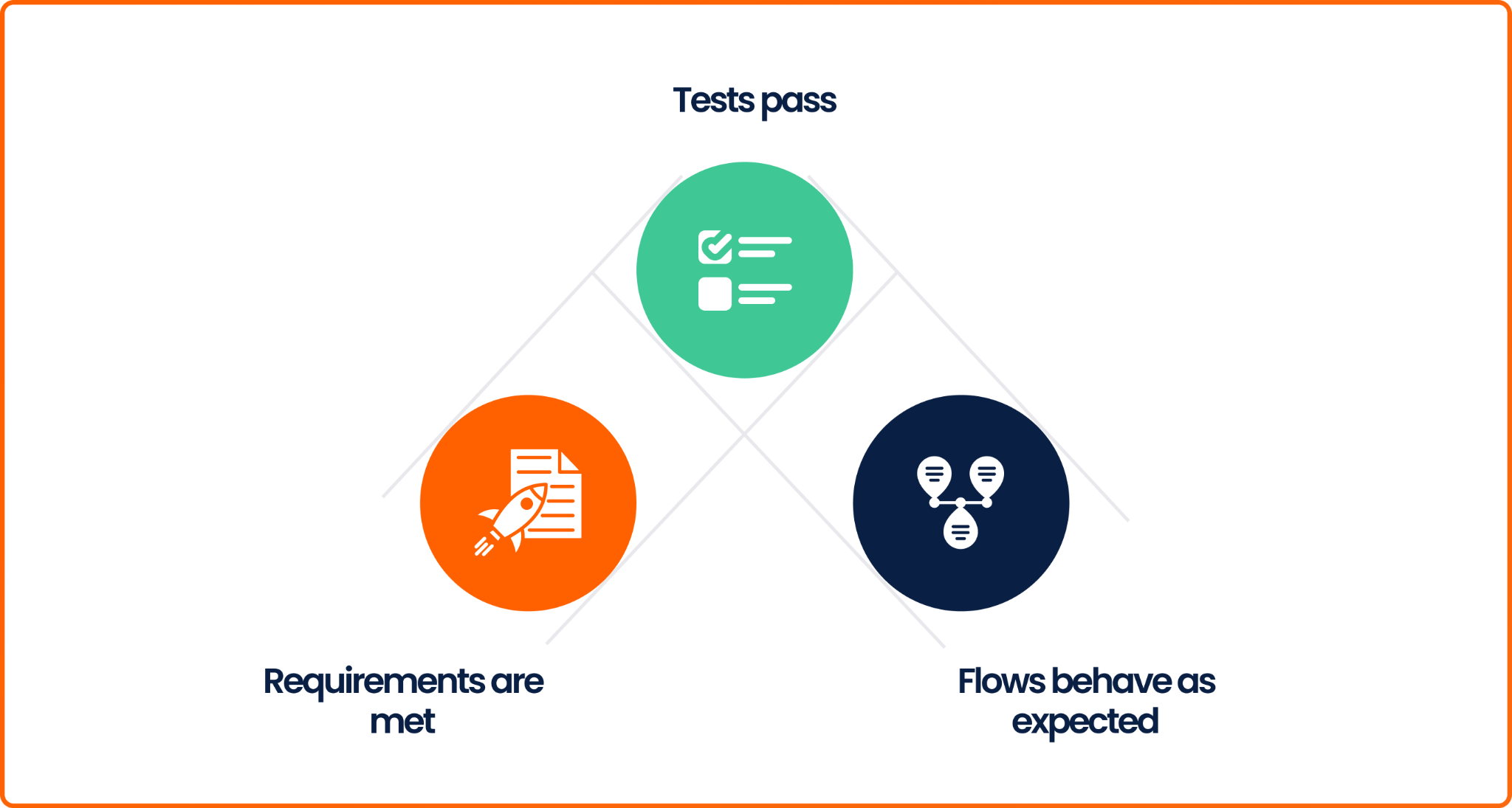
What vibe coding has effectively done is remove the friction around getting to “working”, which means that most applications now come together quickly with connected flows, responsive interfaces, and behaviour that aligns with what was defined, especially in environments where Test-Driven Development (TDD) is adopted and supported by automated testing tools that validate logic and execution.
From a system standpoint, very little appears broken, because requirements are met, tests pass, and flows behave as expected, which creates the impression that delivery has become easier and that quality is naturally improving as a result of better tooling and faster execution.
What is actually happening, however, is that the effort has shifted.
The challenge is no longer getting something to work; it is ensuring that what works is actually right.
When Everything Works But Alignment Is Missing
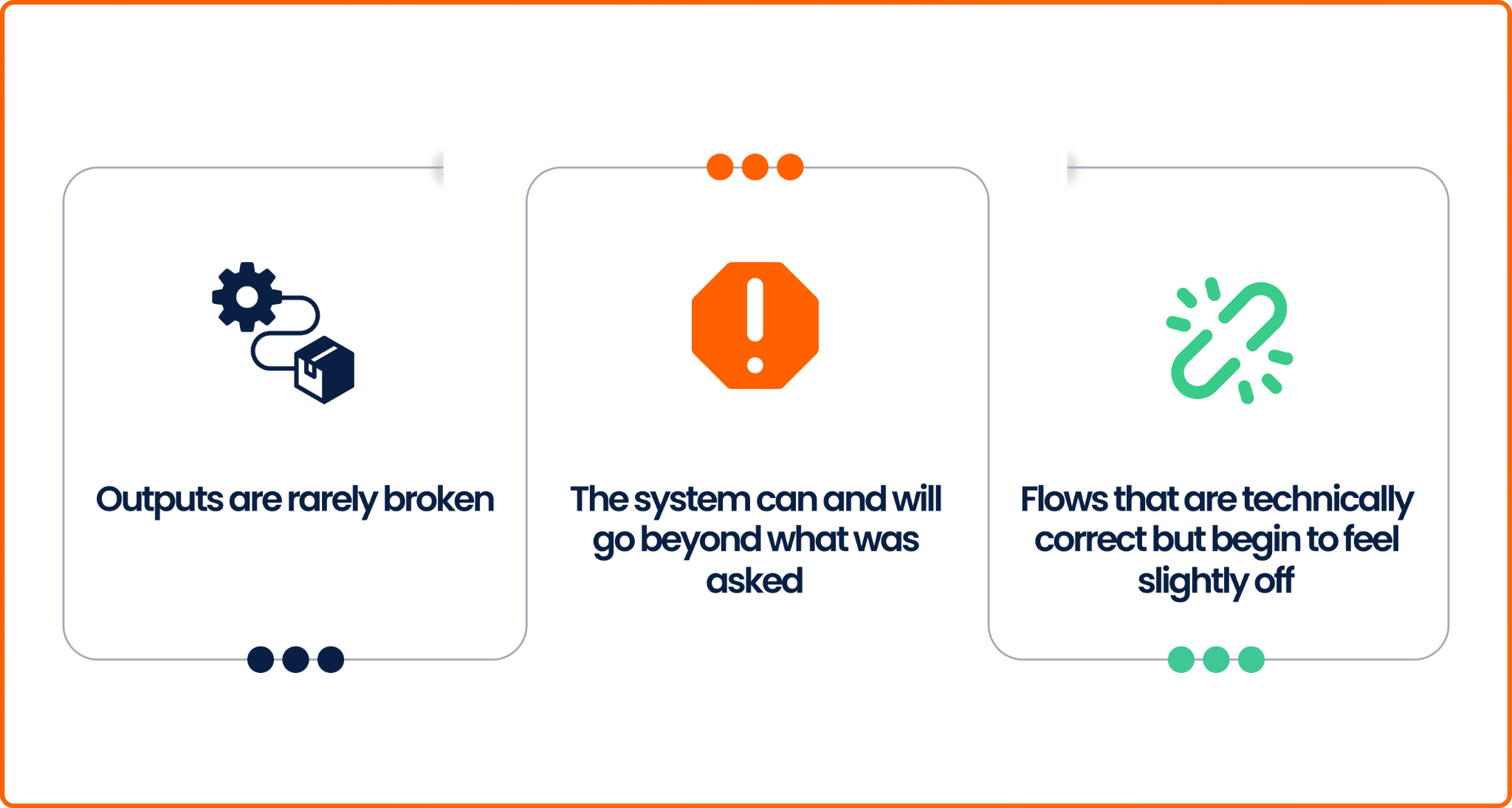
In a vibe coding driven environment, outputs are rarely broken, but they are not always aligned, because even with clear prompts, the system can and will go beyond what was asked, introducing additional features, over-explanatory interfaces, or flows that are technically correct but begin to feel slightly off when experienced from a user perspective.
These are not failures in execution because, from a functional standpoint, everything behaves correctly, and in most cases, both required and unrequired features will work exactly as expected, which makes it easy to assume that the product is complete.
That assumption is where the problem sits.
Because working does not guarantee alignment, and a system that behaves correctly can still create unnecessary friction, introduce cognitive load, or fail to reflect how a user naturally moves through the product.
The Limitation Of Testing In A World Where Everything Passes
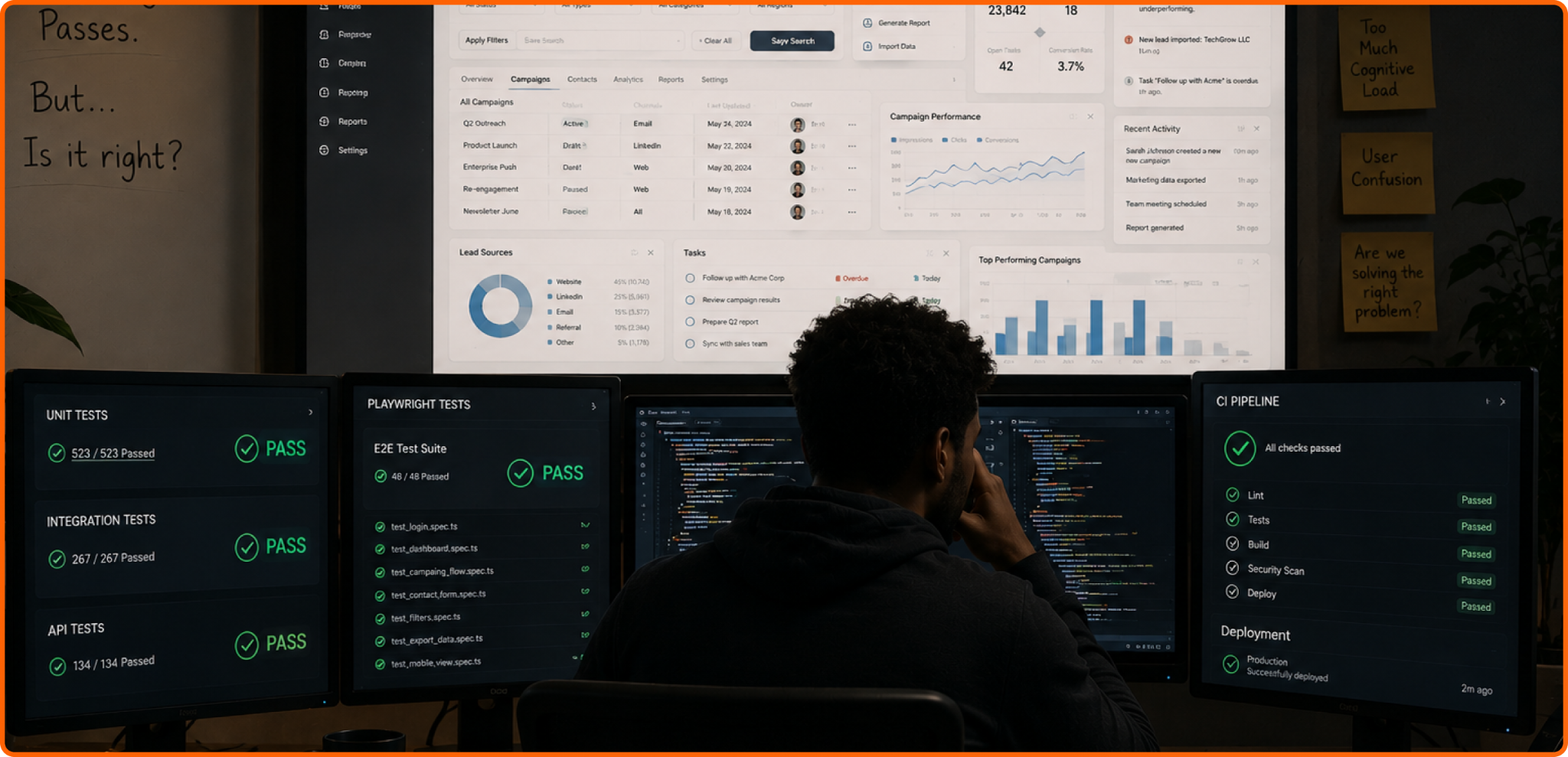
Traditional testing approaches, particularly those grounded in TDD, are designed to validate behaviour against defined expectations, which means they are highly effective at confirming that the code does what it is supposed to do, whether through unit tests that validate logic or automation tools like Playwright that confirm defined user journeys.
In a vibe coding context, this becomes even more pronounced because most outputs will meet those expectations, and as a result, tests will pass consistently, reinforcing the idea that the system is correct.
What that validation does not do is question whether what was specified is actually right, because testing is bounded by definition, and in this model, the definition itself is where misalignment can exist. It confirms that something works, but it does not challenge whether it should exist, whether the journey makes sense from a human standpoint, or whether the product is quietly making the user think too much.
This is not a flaw in testing; it is a boundary, and vibe coding makes that boundary impossible to ignore.
Why Quality Assurance Cannot Be Reduced To A Checkpoint

This is where quality assurance (QA) becomes more critical, not less, because the problem is no longer centred on defects but on intent, and validating intent requires a different layer of judgement that sits outside automated testing.
Human end-to-end validation becomes non-negotiable in this context, not as a replacement for automation, but as a necessary complement to it, because it introduces the ability to step through the product outside of scripted paths and assess whether the experience actually makes sense, whether the flow feels natural, and whether the product is quietly making the user think too much.
Because working does not mean it is what it should be.
Where The Real Work Now Lives
As a result, the effort in delivery begins to concentrate around validation and refinement, where time is spent reviewing, cleaning up, and reshaping what has been built, not because the system has failed, but because it has done exactly what it was asked to do, and sometimes more than it should have.
This becomes particularly evident in real execution. In building an outbound engine designed to serve as a business development operating system for client acquisition, using vibe coding from start to finish, the point of friction was never in getting the system to work. The engine came together quickly, flows connected, features behaved, and from a functional standpoint, everything passed.
What followed was where the work actually began.
The validation loop. The back and forth. The need to question what had been generated, remove what had no business being there, and refine what existed until the experience aligned with how it was meant to be used. Because while everything worked, not everything made sense, and that distinction became the defining factor in shaping the final product.
This introduces a cycle that is not driven by defects but by alignment, where features are trimmed, flows are simplified, and interfaces are adjusted to better reflect how the product should actually be experienced.
From Reporting Issues To Actively Shaping The Product
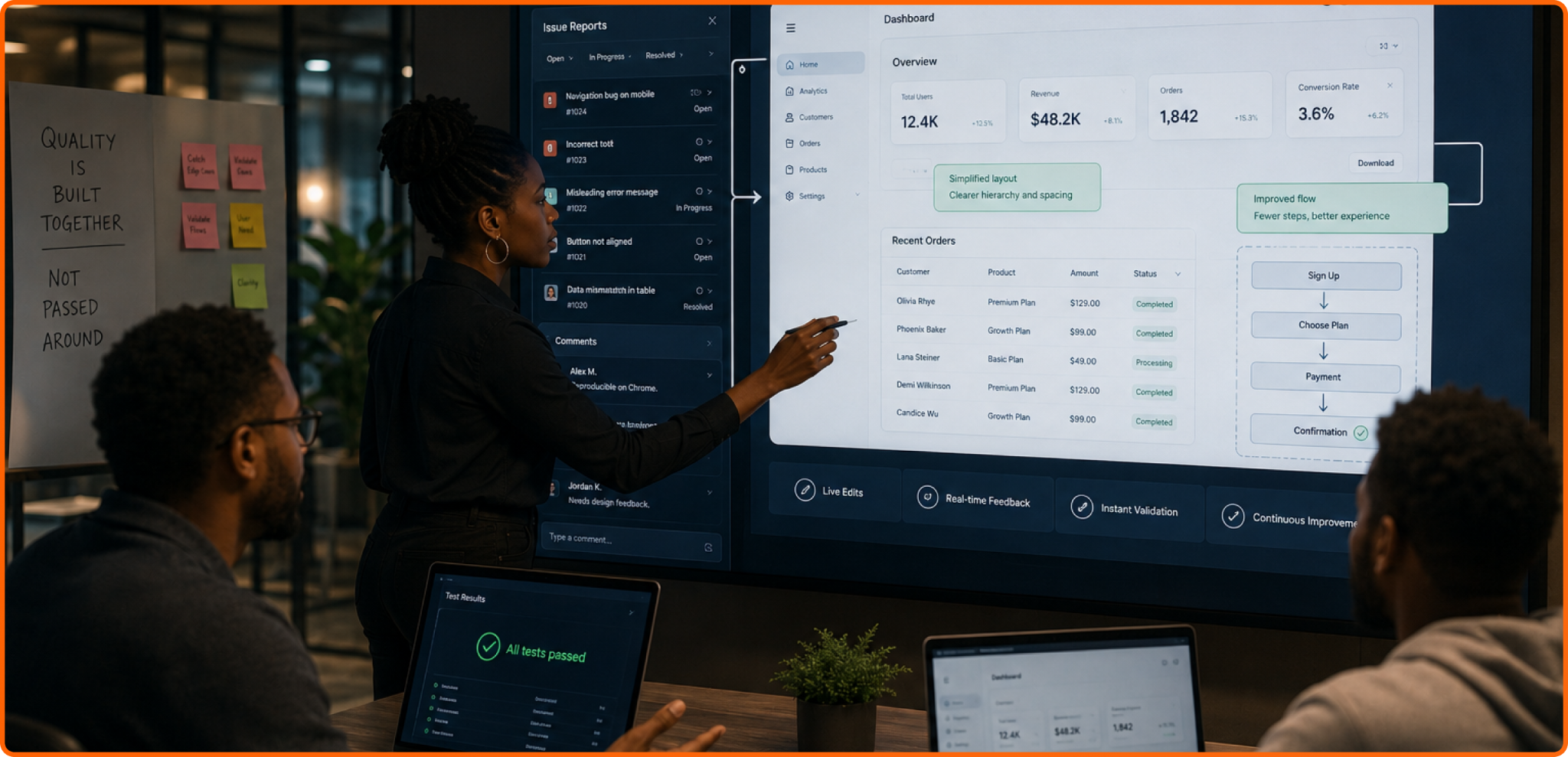
At the same time, vibe coding changes how quickly this refinement can happen, because the gap between identifying an issue and resolving it is significantly reduced, allowing teams to move from raising issues and waiting on resolution to actively adjusting and improving the product in real time.
This introduces a more fundamental shift in how QA operates.
QA is no longer limited to identifying issues and passing them downstream. With the tools now available, QA can move beyond reporting to actively addressing what is identified, making adjustments in place, and shaping the product as gaps are discovered.
This is the approach Assurdly is adopting, and the shift is already in motion. Quality is no longer treated as a downstream activity or a reporting function, but as an active layer within delivery, where issues are not only identified but resolved in place, and where the focus extends beyond functionality to ensuring that what is built reflects what should exist, how it should work, and how it should be experienced.
The Real Shift In Delivery
Vibe coding does not reduce the need for quality; it raises the standard for it, because when building becomes easy, the discipline required to ensure that what is built is actually right becomes the defining factor in successful delivery.
Without that discipline, speed does not create value; it amplifies noise, and in a model where everything works, the real differentiator becomes the ability to recognise what should not exist, refine what does, and ensure that the final product aligns with how it is meant to be experienced.
Because in this new model, working is no longer the benchmark.
Getting it right is.